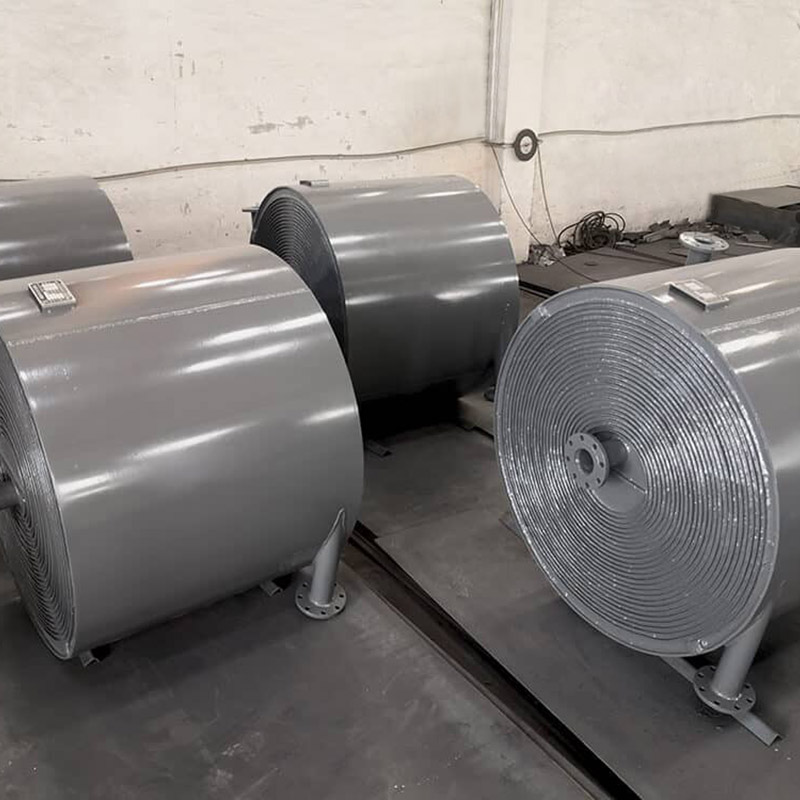
Shell and tube heat exchangers (STHEs) are the most widely deployed heat transfer equipment in industrial processes, renowned for their robustness, scalability, and compatibility with extreme operating conditions. Defined by a cylindrical shell enclosing a bundle of tubes (per TEMA standards—Tubular Exchanger Manufacturers Association—and ASME BPVC Section VIII), STHEs facilitate heat transfer between two fluid streams: one flowing through the tube interior (tube side) and the other across the tube exterior (shell side). Their design has evolved over decades to meet the demands of chemical processing, power generation, oil & gas, and pharmaceutical industries, but they also present inherent tradeoffs that must be balanced against application-specific requirements. This article systematically analyzes the technical advantages, limitations, and industrial use cases of STHEs, providing a rigorous framework for equipment selection.
1. Core Technical Advantages
STHEs dominate industrial applications due to their engineering versatility and performance reliability, rooted in the following key strengths:
1.1 Exceptional Pressure & Temperature Tolerance
STHEs are engineered to withstand extreme process conditions, making them indispensable for high-stakes applications:
- Pressure Range: Typical operating pressures of 0.1–400 bar (gauge), with specialized designs (e.g., thick-walled shells, forged tube sheets) handling up to 1000 bar for high-pressure hydrogenation or supercritical fluid processes.
- Temperature Range: -200°C (cryogenic applications, e.g., LNG cooling) to 1200°C (high-temperature heat recovery, e.g., boiler flue gas), enabled by material selection (e.g., Inconel for high temperatures, stainless steel for cryogenics).
- Technical Rationale: The cylindrical shell geometry distributes pressure uniformly, while tube bundles are designed to resist thermal stress via expansion joints or floating tube sheets (for differential thermal expansion between shell and tubes).
1.2 High Heat Transfer Efficiency
STHEs deliver competitive heat transfer coefficients (U-values) through optimized design features:
- Large Effective Surface Area: Tube bundles (typically 10–10,000 tubes per exchanger) provide substantial heat transfer surface area (1–10,000 m²), with tube diameters ranging from 10–50 mm to balance surface area and pressure drop.
- Enhanced Fluid Turbulence: Shell-side baffles (segmental, disc-and-doughnut, or helical) promote cross-flow over tubes, increasing turbulence (Reynolds number Re = 5000–100,000 for shell-side fluids) and reducing laminar film resistance. Tube-side enhancements (e.g., finned tubes, twisted tapes) further boost U-values by 30–50% for viscous or low-heat-capacity fluids.
- Typical U-Values: 100–1500 W/m²·K (depending on fluid properties), outperforming simple heat exchangers (e.g., double-pipe) for large-scale applications.
1.3 Material Versatility & Corrosion Resistance
STHEs can be fabricated from a wide range of materials to match fluid corrosivity, complying with industry standards (e.g., ASTM A213 for tubes, ASTM A387 for shells):
- Common Materials: Carbon steel (for non-corrosive aqueous fluids), stainless steel (304/316L for mild corrosion), Hastelloy/C-276 (for acidic/alkaline streams), titanium (for seawater or chlorinated fluids), and glass-lined tubes (for high-purity pharmaceutical processes).
- Customization: Material combinations (e.g., stainless steel tubes with carbon steel shells) optimize cost while ensuring corrosion resistance for critical fluid streams.
1.4 Scalability & Design Flexibility
STHEs are highly adaptable to varying process scales and requirements:
- Capacity Scaling: Modular tube bundle design allows scaling from lab-scale (1–10 m² surface area) to industrial-scale (10,000+ m²) by adjusting tube length (1–12 m), diameter, and quantity. Parallel or series configuration of multiple exchangers further extends capacity.
- Flow Configuration: Supports countercurrent, cocurrent, or cross-flow arrangements to maximize temperature approach (ΔT_min ≥ 5°C) and heat recovery efficiency.
- Specialized Designs:
- Floating-head STHEs: Accommodate differential thermal expansion between shell and tubes, ideal for high-temperature applications.
- U-tube STHEs: Single-tube-sheet design with U-shaped tubes, reducing fabrication complexity and cost for moderate temperature ranges.
- Kettle reboiler STHEs: Shell-side vapor-liquid separation for distillation column reboiling applications.
1.5 Robustness & Long Service Life
STHEs are engineered for durability in harsh industrial environments:
- Mechanical Strength: Thick-walled shells (6–50 mm) and rigid tube bundles resist vibration, pressure surges, and mechanical stress, with typical service life of 15–25 years (vs. 5–10 years for plate heat exchangers in high-pressure applications).
- Ease of Maintenance: Removable tube bundles enable cleaning, inspection, and tube replacement (e.g., plugging leaking tubes) without disassembling the entire exchanger. Tube-side cleaning is facilitated by pigging or chemical cleaning (CIP) systems, while shell-side cleaning is possible via baffle removal.
1.6 Compatibility with Complex Fluids
STHEs handle a wide range of fluid types, including:
- Viscous fluids (up to 10,000 mPa·s): Baffle design and tube-side flow optimization minimize pressure drop.
- Fluids with suspended solids: Larger tube diameters (≥25 mm) and higher flow velocities (1–3 m/s) reduce fouling and particle deposition.
- Hazardous or toxic fluids: Leak-tight design (e.g., double-tube sheets, gasketed joints per API 660) prevents cross-contamination and ensures safety.
2. Key Technical Limitations
Despite their versatility, STHEs present inherent drawbacks that may limit their suitability for certain applications:
2.1 Large Footprint & Space Requirements
STHEs have a low surface area-to-volume ratio compared to compact heat exchangers (e.g., plate, printed circuit):
- Space Comparison: A STHE with 100 m² surface area requires ~10–15 m³ of installation space, vs. 1–2 m³ for a plate heat exchanger with the same surface area.
- Limitation: Critical in space-constrained facilities (e.g., offshore platforms, modular plants) where compactness is prioritized.
2.2 Higher Initial Capital Cost
STHEs incur higher upfront costs due to material and fabrication requirements:
- Cost Drivers: Cylindrical shell fabrication (rolling, welding, pressure testing), tube bundle assembly (tube-to-tube-sheet welding/brazing), and specialized materials (e.g., titanium, Hastelloy) for corrosive applications.
- Cost Comparison: 20–50% higher initial cost than plate heat exchangers for equivalent capacity, though long service life (15–25 years) and low maintenance costs often offset this over the lifecycle.
2.3 Susceptibility to Fouling
Fouling (deposition of solids, scales, or biological growth on tube surfaces) reduces heat transfer efficiency and increases pressure drop:
- Fouling Mechanisms: Crystalline scaling (e.g., calcium carbonate in aqueous streams), particulate deposition (e.g., catalyst fines in chemical processes), and biological fouling (e.g., algae in cooling water).
- Impact: U-value degradation by 20–50% over time, requiring regular cleaning (chemical or mechanical) and potentially reducing throughput.
- Mitigation Challenges: Shell-side fouling is harder to remove than tube-side fouling due to baffle geometry, often requiring exchanger shutdown for manual cleaning.
2.4 Lower Thermal Efficiency vs. Compact Exchangers
For applications requiring maximum heat recovery in minimal space, STHEs are outperformed by compact designs:
- Heat Transfer Coefficients: Plate heat exchangers achieve U-values of 1500–5000 W/m²·K (vs. 100–1500 W/m²·K for STHEs) due to intimate fluid contact and higher turbulence.
- Temperature Approach: Compact exchangers can operate with ΔT_min = 1–3°C (vs. 5–10°C for STHEs), enabling better heat recovery from low-grade waste heat.
2.5 Limited Suitability for Highly Viscous Fluids
While STHEs handle moderate viscosity (up to 10,000 mPa·s), they become inefficient for highly viscous fluids (>10,000 mPa·s):
- Pressure Drop Penalty: High viscosity increases flow resistance, requiring larger pumps and higher energy consumption to maintain sufficient flow velocity (1–3 m/s for tube-side fluids).
- Alternative: Wiped film or scraped-surface heat exchangers are preferred for highly viscous or shear-sensitive fluids (e.g., polymers, food pastes).
2.6 Complex Fabrication & Design
STHE design requires rigorous engineering to ensure thermal performance and mechanical integrity:
- Design Complexity: Calculations for shell-side flow distribution, pressure drop, thermal stress, and vibration (per TEMA standards) demand specialized software (e.g., HTRI Xchanger Suite, Aspen Plus) and expertise.
- Fabrication Tolerances: Tight tolerances for tube-to-tube-sheet joints (leakage prevention) and baffle spacing (flow optimization) increase manufacturing complexity and lead time.
3. Industrial Applications: Where STHEs Excel
STHEs are the preferred choice for applications leveraging their strengths in pressure/temperature tolerance, robustness, and fluid compatibility:
3.1 Chemical & Pharmaceutical Industry
- Distillation & Fractionation: Reboilers and condensers for distillation columns (e.g., ethylene glycol production), where high temperatures (200–400°C) and pressures (10–50 bar) are common.
- Chemical Reactors: Heat integration for exothermic/endothermic reactions (e.g., ammonia synthesis, polymerization), with corrosion-resistant materials (Hastelloy, glass-lined tubes) for aggressive media.
- Solvent Recovery: Condensers for solvent vapor streams (e.g., methanol, acetone), ensuring high recovery efficiency (95%+).
3.2 Oil & Gas Industry
- Crude Oil Processing: Heaters and coolers for crude oil distillation, with high-pressure designs (50–100 bar) to handle unrefined crude’s corrosive and viscous properties.
- Natural Gas Processing: Condensers for natural gas liquids (NGL) recovery and gas coolers for dehydration processes, operating at cryogenic temperatures (-100 to -50°C) or high pressures (100–400 bar).
- Refining: Hydrocracker reactors, catalytic reformer heaters, and FCC (Fluid Catalytic Cracking) unit coolers, where robustness against catalyst fines and high temperatures is critical.
3.3 Power Generation
- Steam Cycles: Condensers for steam turbines (vacuum operation, 0.01–0.1 bar) and feedwater heaters, with large surface areas (1000–10,000 m²) to maximize heat recovery.
- Waste Heat Recovery: Heat exchangers for flue gas heat recovery in coal-fired or gas-fired power plants, handling high temperatures (300–800°C) and particulate-laden streams.
3.4 Food & Beverage Industry
- Pasteurization/Cooling: Heat exchangers for milk, juice, and beer pasteurization, with stainless steel construction (316L) to meet food safety standards (FDA, EHEDG).
- Concentration: Evaporator preheaters for sugar syrups or fruit concentrates, operating at moderate pressures (5–15 bar) to preserve product quality.
3.5 HVAC & Refrigeration
- Chilled Water Systems: Shell and tube condensers and evaporators for large-scale HVAC systems (commercial buildings, data centers), handling high refrigerant pressures (10–30 bar).
4. Decision-Making Framework: When to Choose STHEs
Selecting STHEs depends on balancing their advantages against limitations, with key criteria including:
- Operating Conditions: Prioritize STHEs for high pressure (>15 bar), high temperature (>200°C), or cryogenic applications; opt for compact exchangers for low ΔT_min or space constraints.
- Fluid Properties: STHEs are ideal for corrosive, viscous (≤10,000 mPa·s), or solids-containing fluids; choose plate exchangers for clean, low-viscosity fluids.
- Scale & Lifecycle Cost: STHEs are cost-effective for large-scale, long-term applications (10+ years); plate exchangers may be preferred for small-scale or short-term projects due to lower initial cost.
- Maintenance Access: STHEs are easier to maintain for tube-side fouling; plate exchangers offer faster cleaning for shell-side fouling.
5. Conclusion
Shell and tube
heat exchangers remain the workhorse of industrial heat transfer, offering unmatched robustness, pressure/temperature tolerance, and material versatility. Their ability to handle complex fluids, scale to large capacities, and operate reliably in harsh conditions makes them indispensable in chemical processing, oil & gas, power generation, and beyond. However, their large footprint, higher initial cost, and susceptibility to fouling limit their suitability for space-constrained, low-pressure, or highly efficient heat recovery applications.
For engineers and plant operators, the decision to adopt STHEs requires a technical assessment of operating parameters, fluid properties, and lifecycle costs. When their strengths align with application requirements, STHEs deliver exceptional performance, durability, and safety—justifying their position as the most widely used heat exchanger type in industrial settings. As materials science and design software advance, STHEs continue to evolve (e.g., enhanced fouling resistance, improved thermal efficiency) to meet the growing demands of sustainable and high-performance industrial processes.