Working Principles of Extraction Columns
The core operating principle of extraction columns is liquid-liquid extraction, a separation technology that leverages the difference in solubility of target solutes in two immiscible or partially miscible solvents. One solvent (termed the extractant) has a high affinity for the target solute, while the other (termed the raffinate) is the original carrier phase of the solute. The separation process inside the extraction column involves three key stages:
1. Phase Contact and Mass Transfer
The two immiscible liquid phases are introduced into the column from different positions, forming a countercurrent or co-current flow pattern. Countercurrent flow is the dominant mode in industrial applications due to its higher separation efficiency. In this mode, the extractant phase flows upward, and the raffinate phase flows downward (or vice versa). Intensive contact occurs at the interface between the two phases, driving the target solute to diffuse from the raffinate phase to the extractant phase. This mass transfer process continues until the solute reaches a dynamic equilibrium between the two phases.
2. Phase Dispersion and Enhancement
To maximize the mass transfer rate, extraction columns are equipped with internal components that disperse one phase into the other in the form of droplets, creating a large contact surface area. For example, mechanical agitation components break the continuous phase into discrete droplets, while packing materials or sieve plates disrupt the flow to enhance turbulence. The dispersed phase droplets move through the continuous phase, and solute transfer occurs across the droplet surface.
3. Phase Separation and Product Collection
After sufficient mass transfer, the two phases enter the clarification section at the top or bottom of the column. Due to differences in density, the phases separate naturally: the denser phase settles at the bottom, and the lighter phase floats at the top. The solute-rich extractant phase (called the extract) is collected from one outlet, while the solute-depleted raffinate phase is discharged from the other outlet. The extract then undergoes further treatment (e.g., distillation or stripping) to recover the target solute and regenerate the extractant for reuse in the extraction cycle.
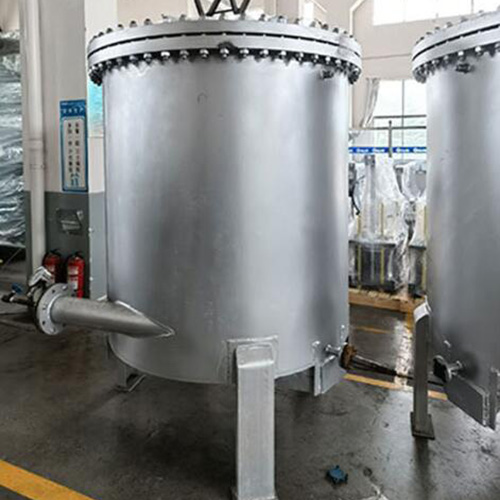
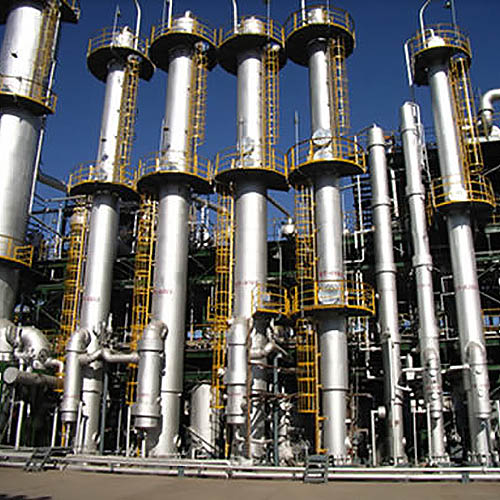
An industrial extraction column is a vertical cylindrical device composed of tower body, internal components, feeding/discharging units, and auxiliary systems, all of which work together to ensure efficient liquid-liquid contact and separation:
1. Tower Body
The tower body is the main shell of the extraction column, typically made of carbon steel, stainless steel, or corrosion-resistant alloys (e.g., Hastelloy) depending on the corrosivity of the process fluids. Its height and diameter are determined by the required separation efficiency and processing capacity: taller columns provide longer contact time for phases, while larger diameters accommodate higher flow rates. The tower body is designed to withstand the operating pressure and temperature, which are generally moderate (atmospheric pressure and room temperature to 100℃) for most extraction processes.
2. Internal Components
Internal components are the key to enhancing mass transfer efficiency, and their design varies based on the type of extraction column:
- Packed Extraction Columns: Filled with random packings (e.g., Pall rings, Intalox saddles) or structured packings. These packings increase the contact area between the two phases and reduce axial mixing, improving separation efficiency. They are suitable for processes with low viscosity fluids and moderate separation requirements.
- Sieve Tray Extraction Columns: Equipped with multiple sieve trays at intervals. Each tray has small holes that allow the dispersed phase to pass through as droplets, while the continuous phase flows horizontally across the tray. The trays create discrete contact stages, making separation more controllable. They are widely used in petrochemical and pharmaceutical industries.
- Agitated Extraction Columns: Featured with rotating agitators (e.g., rotating discs, impellers) installed along the central shaft. The agitators shear the continuous phase into small droplets, significantly enhancing phase contact and mass transfer. This type is ideal for separating systems with low interfacial tension or high viscosity fluids.
3. Feeding/Discharging Units
- Feed Inlets: The raffinate and extractant are introduced through separate inlets, usually located at the top and bottom of the column to achieve countercurrent flow. Distributors are installed at the inlets to ensure uniform distribution of the fluids across the column cross-section.
- Product Outlets: The extract and raffinate outlets are positioned at the opposite ends of the feed inlets, with weirs or baffles to facilitate phase separation and prevent carry-over of droplets between phases.
4. Auxiliary Systems
- Phase Separation Aids: Some columns are equipped with coalescers in the clarification section to promote the merging of dispersed phase droplets, accelerating phase separation.
- Temperature Control System: Jackets or coils are installed around the tower body to maintain a stable operating temperature, as temperature affects solute solubility and phase equilibrium.
Typical Industrial Applications of Extraction Columns
Extraction columns are widely used in various industries for the separation and purification of target components, thanks to their high efficiency, low energy consumption, and suitability for heat-sensitive materials. Typical applications include:
1. Petrochemical Industry
The most prominent application is aromatic hydrocarbon extraction. In crude oil refining, extraction columns use solvents such as sulfolane or N-methylpyrrolidone (NMP) to separate aromatic hydrocarbons (benzene, toluene, xylene) from aliphatic hydrocarbon mixtures. The extractant selectively dissolves aromatic hydrocarbons, and the resulting extract is distilled to obtain high-purity aromatic products, which are essential raw materials for plastics, rubber, and dye production.
2. Pharmaceutical and Biotechnology Industry
Extraction columns play a critical role in the purification of active pharmaceutical ingredients (APIs) and bioactive compounds. For example, in the production of antibiotics, the fermentation broth is fed into an extraction column, where organic solvents extract antibiotics from the aqueous broth. This process is carried out at low temperatures, avoiding the degradation of heat-sensitive antibiotics. Additionally, extraction columns are used to separate herbal extracts, such as the extraction of flavonoids and alkaloids from plant materials.
3. Metallurgical Industry
In hydrometallurgy, extraction columns are used for the separation and recovery of valuable metals from ore leachates. For instance, solvent extraction of copper, nickel, and cobalt from acidic leach solutions: extractants like LIX reagents selectively bind to metal ions, transferring them from the aqueous phase to the organic phase. The metal-rich extract is then stripped with acid to obtain concentrated metal solutions, which are further processed into metal products. This technology is also applied in the recovery of rare earth elements.
4. Environmental Protection and Waste Treatment
Extraction columns are effective in treating industrial wastewater containing organic pollutants or heavy metals. For example, they can remove phenols, organic acids, and pesticides from wastewater using appropriate extractants. The pollutants are transferred from the aqueous wastewater to the organic extractant, purifying the wastewater to meet discharge standards. The extract can be regenerated by stripping, and the recovered pollutants can be reused or disposed of safely.
5. Food and Beverage Industry
In food processing, extraction columns are used for the purification of edible oils and the extraction of flavor compounds. For example, the refining of vegetable oils uses solvent extraction to remove free fatty acids, pigments, and impurities. Additionally, they are used to extract caffeine from coffee beans and tea leaves, producing decaffeinated products while preserving the original flavor.
High-efficiency Characteristics of Extraction Columns
As a core separation device, extraction columns exhibit distinct advantages that make them a preferred choice in industrial separation processes:
1. High Separation Efficiency
Countercurrent flow and enhanced phase contact enable extraction columns to achieve high-purity separation of target components, even for systems with small solubility differences. Advanced internal components (e.g., structured packings, high-efficiency agitators) further improve mass transfer rates, reducing the required column height and footprint.
2. Low Energy Consumption
Unlike distillation, which relies on phase change (vaporization-condensation) requiring large amounts of heat, extraction operates at near-ambient temperatures without phase change. This significantly reduces energy consumption, especially for heat-sensitive materials that cannot withstand high temperatures.
3. Flexible Operation and Strong Adaptability
Extraction columns can handle a wide range of feed flow rates and solute concentrations. By adjusting parameters such as solvent-to-feed ratio and agitation speed, the separation performance can be optimized for different systems. They are also compatible with various solvents and can be constructed with corrosion-resistant materials to handle acidic, alkaline, or corrosive fluids.
4. Environmentally Friendly Process
Most extractants can be regenerated and reused, minimizing waste generation. The closed operation of extraction columns prevents the emission of volatile organic compounds (VOCs), reducing environmental pollution. In wastewater treatment, this technology realizes the recycling of pollutants and water resources.