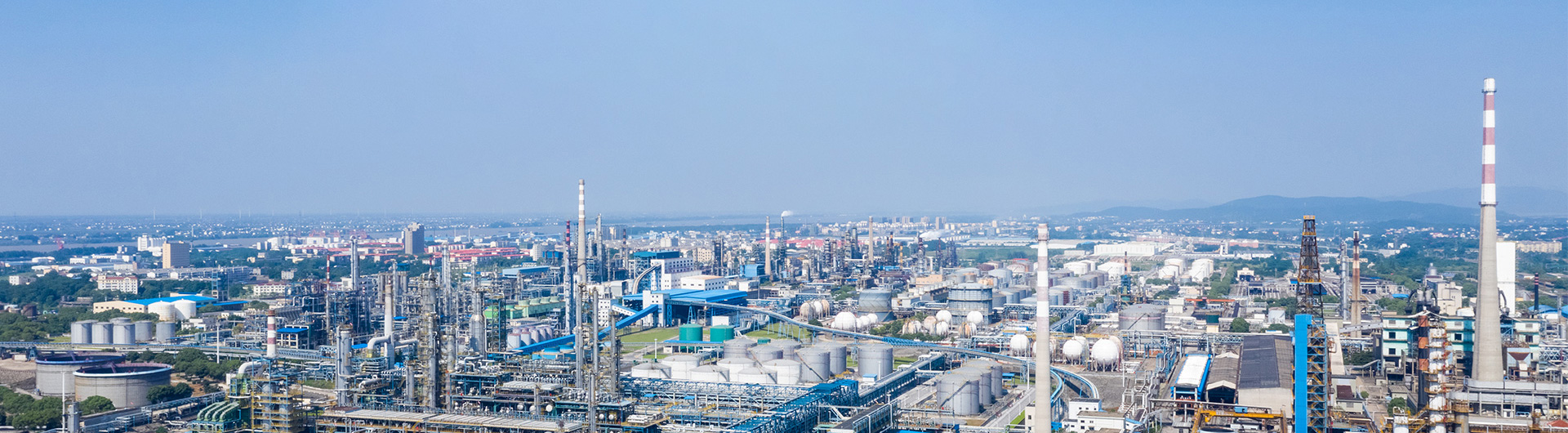
Working Principles of Distillation Columns
The operation of distillation columns is fundamentally based on the difference in relative volatility of components within a mixture. Relative volatility, defined as the ratio of vapor pressures of two components at the same temperature, dictates the feasibility and efficiency of separation. The separation process unfolds in three core stages:
Feed Preheating and Introduction
The raw multi-component mixture is preheated to a temperature close to its boiling point using a dedicated heater. This preheating step minimizes the energy required for vaporization inside the column and facilitates rapid vapor-liquid equilibrium establishment post-feeding. The preheated mixture is then introduced into the middle section of the column through a feed inlet, a position optimized to balance the separation of light and heavy components.
Vapor-liquid Contact and Mass Transfer
Upon entering the column, the mixture splits into two phases. The liquid phase flows downward along the internal components, while the vapor phase rises upward, driven by continuous heating from the reboiler at the column bottom. During countercurrent contact, intensive heat and mass transfer occur at the vapor-liquid interface:
- Low-boiling-point components in the liquid phase, characterized by higher vapor pressures, readily vaporize and transfer into the rising vapor phase.
- High-boiling-point components in the vapor phase, with lower vapor pressures, tend to condense and dissolve into the descending liquid phase.
This cyclic vaporization-condensation process is equivalent to conducting multiple rounds of simple distillation inside the column. It progressively enriches light components in the upward vapor stream and heavy components in the downward liquid stream, ultimately achieving high-precision separation of the mixture.
Reflux and Product Extraction
Reflux is the critical factor that ensures high-efficiency separation in distillation columns. The vapor reaching the column top is condensed into liquid by the condenser. A portion of this condensed liquid is withdrawn as the top product (distillate), which is rich in low-boiling-point components. The remaining portion flows back down the column wall as reflux liquid.
The descending reflux liquid countercurrently contacts the rising vapor, acting as a cold source to facilitate the condensation of heavy components in the vapor and a carrier to promote the vaporization of light components in the liquid. This interaction significantly enhances the separation efficiency of the column. At the column bottom, the liquid is continuously heated by the reboiler; a fraction is vaporized to form the rising vapor stream, while the rest is extracted as the bottom product (residue), which is concentrated with high-boiling-point components.
Core Structure of Distillation Columns
An industrial distillation column consists of three integrated parts: tower body, tower internals, and auxiliary systems, each of which is essential for stable and efficient operation.
Tower Body
The tower body is a vertical cylindrical pressure vessel that serves as the main shell of the distillation column. Its key design parameters are determined by the process requirements:
- Material Selection: Carbon steel is used for non-corrosive media, while stainless steel, titanium alloy, or fluoroplastic-lined materials are adopted for corrosive fluids (e.g., acids, alkalis, and salt solutions) to ensure equipment durability.
- Pressure and Temperature Rating: Columns are categorized into atmospheric, pressurized, and vacuum distillation columns based on operating conditions. Vacuum distillation columns are particularly suitable for separating heat-sensitive components by lowering the boiling point of the mixture.
- Dimensions: The column height is correlated with the required number of separation stages—taller columns accommodate more stages and achieve better separation effects. The column diameter is sized according to the vapor and liquid flow rates to prevent flooding, a phenomenon where excessive vapor velocity traps liquid inside the column and disrupts normal operation.
Tower Internals
Tower internals are the core components that enable vapor-liquid contact and mass transfer, directly impacting the separation efficiency and energy consumption of the column. They are mainly divided into two types:
1. Tray Internals
Tray columns are equipped with tray internals, which create discrete vapor-liquid contact stages. Common tray types include:
- Float Valve Trays: Composed of tray plates, float valves, and downcomers. The float valves can rise and fall with varying vapor velocities, ensuring stable operation across a wide load range. They offer high separation efficiency and strong adaptability, making them the most widely used tray type in industrial applications.
- Sieve Trays: Feature numerous small holes on the tray plate. Vapor rises through these holes to contact the liquid on the tray surface. Sieve trays have a simple structure, low manufacturing cost, and high processing capacity, but their operation flexibility is limited, and they are prone to weeping (liquid leakage through the holes) at low vapor velocities.
- Bubble Cap Trays: Each hole on the tray is fitted with a bubble cap, which ensures uniform vapor distribution and stable operation even at low loads. However, their complex structure leads to high pressure drop and manufacturing costs, restricting their application scope.
2. Packing Internals
Packed columns are filled with packing internals, which provide a large specific surface area for continuous vapor-liquid contact. Packings are classified into two categories:
- Random Packings: Including Raschig rings, Pall rings, and Intalox saddles. These small, irregularly shaped particles are randomly filled in the column. They are easy to install and cost-effective, suitable for medium-separation-efficiency applications.
- Structured Packings: Such as metal corrugated packings and ceramic structured packings. These are arranged in a regular, layered manner inside the column, offering a large specific surface area, low pressure drop, and high separation efficiency. They are ideal for precision separation processes, such as the purification of pharmaceutical intermediates and aromatic hydrocarbon separation.
3. Auxiliary Components of Tower Internals
Feed distributors ensure uniform distribution of the raw mixture across the column cross-section, preventing localized concentration differences. Liquid redistributors address the wall flow effect, where liquid tends to flow along the column wall instead of through the packing or trays. Demisters installed at the column top remove liquid droplets entrained in the vapor, improving the purity of the top product. Downcomers guide the liquid from the upper tray to the lower tray smoothly, maintaining the liquid level on each tray.
Auxiliary Systems
Auxiliary systems are indispensable for the continuous and stable operation of distillation columns, including:
- Reboiler: Located at the column bottom, it supplies the heat required to vaporize the liquid phase. Common types are kettle reboilers and thermosiphon reboilers, with the latter offering higher heat transfer efficiency due to natural circulation driven by density differences.
- Condenser: Positioned at the column top, it condenses the rising vapor into liquid. Total condensers fully condense the vapor, while partial condensers only condense a portion, which is suitable for separating components with large boiling point differences.
- Reflux Drum: Stores the condensed liquid from the condenser, separates non-condensable gases, and provides a stable liquid source for column reflux.
- Pump and Pipeline System: Transports raw materials, products, and reflux liquid. Equipped with flowmeters, pressure gauges, and control valves, this system enables real-time adjustment of process parameters to maintain optimal operating conditions.
Distillation columns are widely used in various industrial fields due to their high-efficiency separation performance, as detailed below:
Petroleum Refining Industry
The petroleum refining industry is the largest application field for distillation columns. Crude oil distillation columns are the core equipment of refineries, separating crude oil into multiple fractions based on boiling point differences:
- Light fractions (gasoline, boiling point 30–200℃; kerosene, boiling point 150–250℃) are used as vehicle fuels and jet fuels.
- Medium fractions (diesel, boiling point 200–350℃) serve as diesel engine fuels.
- Heavy fractions (lubricating oil base oil) are processed into lubricants, while the residual asphalt is used for road construction and waterproof material production.
Chemical Manufacturing Industry
In chemical production, distillation columns are critical for raw material purification and reaction product separation:
- Organic Solvent Purification: Distillation columns are used for ethanol dehydration, methanol rectification, and acetone recovery, producing high-purity solvents that meet the strict requirements of chemical synthesis processes.
- Aromatic Hydrocarbon Separation: They separate mixed aromatics (benzene, toluene, xylene) from petroleum cracking products. These aromatics are key raw materials for manufacturing plastics, rubber, dyes, and pesticides.
- Inorganic Chemical Separation: Distillation columns are applied in the purification of hydrochloric acid and sulfuric acid, as well as the separation of ammonium chloride and ammonia water in the ammonia production process.
Pharmaceutical and Food Industry
In the pharmaceutical and food sectors, distillation columns are used for product purification and solvent recovery, with strict requirements for product purity and safety:
- Pharmaceutical Production: Distillation columns purify drug intermediates and active pharmaceutical ingredients (APIs), removing impurities to ensure drug efficacy and safety. For example, in antibiotic production, they separate and purify fermentation broths to obtain high-purity active components.
- Food and Beverage Processing: They are used for alcohol distillation in liquor and beer production, and for concentrating fruit juice and syrup. Vacuum distillation columns are preferred in this field to lower the boiling point of materials, avoiding the decomposition of heat-sensitive nutrients and flavor compounds.
Environmental Protection and Waste Treatment
In environmental protection, distillation columns play a vital role in industrial waste recovery and treatment:
- Waste Solvent Recovery: They recycle organic solvents (dichloromethane, ethyl acetate) from industrial wastewater and exhaust gas, reducing environmental pollution and realizing resource reuse.
- Heavy Metal Wastewater Treatment: Through distillation and evaporation, distillation columns separate and recover heavy metal ions from wastewater, helping enterprises meet environmental discharge standards.