Working Principles of Scraped Surface Evaporators
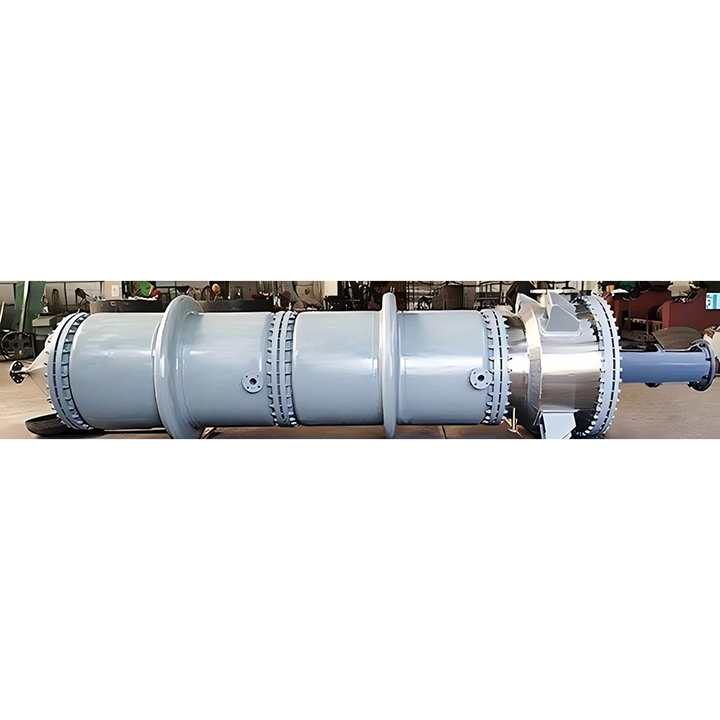
A scraped surface evaporator (SSE) is a specialized thin-film evaporator designed for handling high-viscosity, heat-sensitive, and fouling-prone materials. Its operation relies on the synergistic effect of mechanical scraping and jacketed heating to form a uniform liquid film, enabling efficient heat transfer and rapid evaporation. The working process is divided into four key stages:
1. Feed Introduction
The raw material—ranging from viscous pastes to suspensions containing solid particles—is pumped into the evaporator’s cylindrical shell from the top or bottom inlet. The feed rate is precisely controlled to match the scraping speed, ensuring optimal liquid film thickness (typically 0.1–1 mm).
2. Thin-film Formation and Heat Transfer
The evaporator’s inner wall is equipped with a heating jacket, where a heat transfer medium (e.g., steam, thermal oil) circulates to provide uniform heating. A rotating shaft with fixed wiper blades (scrapers) rotates at a speed of 50–500 rpm along the inner wall. As the shaft turns, the scrapers continuously spread the incoming feed into a thin, turbulent liquid film across the heated surface. This mechanical action eliminates boundary layer resistance and prevents material from adhering to the wall or forming scale, which is a critical advantage over conventional evaporators.
3. Evaporation and Vapor-Liquid Separation
The thin liquid film absorbs heat rapidly from the jacket, causing volatile components to vaporize instantly. The generated vapor rises to the top separation chamber, where entrained liquid droplets are removed by a demister to ensure vapor purity. Non-volatile components or concentrated products remain in the liquid phase, adhering to the wall temporarily before being scraped off.
4. Product Discharge
The concentrated liquid product is continuously discharged from the bottom outlet of the evaporator. The separated vapor is condensed in an external condenser for solvent recovery or direct collection, while the non-condensable gases are vented to maintain system pressure.
Scraped surface evaporators can operate under vacuum conditions (absolute pressure 1–100 mbar), which lowers the boiling point of materials and further reduces thermal degradation risks for heat-sensitive substances.
The unique structural design of SSEs endows them with distinct performance advantages that make them irreplaceable in processing challenging materials:
1. Exceptional Heat Transfer Efficiency
The thin, turbulent liquid film formed by scrapers minimizes the thermal resistance between the material and the heated wall. The heat transfer coefficient of SSEs ranges from 500–3000 W/(m²·K), which is 2–5 times higher than that of falling-film or forced-circulation evaporators. This high efficiency enables rapid evaporation even for high-viscosity materials (viscosity up to 1,000,000 mPa·s).
2. Ultra-short Material Residence Time
Materials stay in the heated zone for only 2–10 seconds, which is significantly shorter than other evaporator types. This ultra-short residence time effectively prevents thermal degradation, oxidation, and polymerization of heat-sensitive components, making SSEs ideal for processing pharmaceuticals, food ingredients, and fine chemicals.
3. Strong Adaptability to Complex Materials
Unlike conventional evaporators that are prone to fouling and blockage, SSEs handle a wide range of challenging feedstocks:
- High-viscosity materials: such as honey, molasses, and polymer melts
- Suspensions and slurries: containing solid particles (up to 30% by weight) like fruit pulp, ceramic slurries, and wastewater sludge
-crystallizing materials: including salts, organic acids, and resin intermediates
The rotating scrapers continuously remove adhering materials and crystals from the wall, ensuring long-term stable operation without frequent cleaning.
4. Flexible Operation and Easy Scaling
SSEs can operate under a wide range of processing conditions, with adjustable parameters (scraping speed, feed rate, heating temperature, vacuum level) to optimize evaporation performance for different materials. They are also easy to scale from laboratory-scale (0.1 m² heating area) to industrial-scale (50 m² heating area) systems, maintaining consistent separation efficiency across all scales.
5. Low Energy Consumption
The thin-film design and high heat transfer efficiency reduce the required heating area and energy input. When combined with vacuum operation, the boiling point of materials is lowered, further cutting down the energy consumption of the heat transfer medium. Additionally, the closed system minimizes heat loss, enhancing overall energy efficiency.
Multi-field Industrial Applications
Thanks to their outstanding performance, scraped surface evaporators are widely used in various industries that require processing of heat-sensitive and high-viscosity materials:
1. Food and Beverage Industry
SSEs are a key piece of equipment for concentrating heat-sensitive food ingredients:
- Fruit and vegetable processing: concentrating tomato paste, fruit juice, and vegetable puree while preserving flavor compounds, vitamins, and pigments
- Dairy industry: evaporating milk, whey, and cream to produce condensed milk and milk powder, avoiding protein denaturation caused by high-temperature and long-time heating
- Confectionery industry: concentrating honey, molasses, and syrup to the desired consistency without caramelization
2. Pharmaceutical and Biotechnology Industry
In pharmaceutical production, SSEs meet the strict requirements for product purity and activity:
- Concentrating herbal extracts, antibiotic fermentation broths, and enzyme solutions to retain the bioactivity of active ingredients
- Recovering organic solvents from pharmaceutical intermediates and raw materials, ensuring compliance with environmental and safety standards
- Processing drug formulations with high viscosity, such as ointments and suspensions
3. Chemical and Petrochemical Industry
SSEs handle a variety of specialty chemical materials:
- Concentrating polymer solutions (e.g., polyvinyl alcohol, polyester) and resin melts to control molecular weight and viscosity
- Recovering solvents from paint, ink, and adhesive production wastewater
- Processing organic acids (citric acid, lactic acid) and amino acid solutions, preventing product degradation and scaling
4. Environmental Protection and Waste Treatment
SSEs play an important role in resource recycling and wastewater treatment:
- Concentrating industrial wastewater containing high concentrations of organic matter or salts to reduce wastewater volume, facilitating subsequent treatment or disposal
- Recovering valuable components from food and pharmaceutical waste streams, such as proteins from dairy wastewater and sugars from fruit processing waste
- Treating sludge generated from municipal and industrial wastewater treatment plants by reducing moisture content.
Conclusion
Scraped surface evaporators stand out in the field of special evaporation technology due to their unique mechanical scraping design, ultra-short residence time, and strong adaptability to complex materials. Their high heat transfer efficiency and ability to preserve the quality of heat-sensitive products make them the preferred equipment for food, pharmaceutical, chemical, and environmental protection industries. With the continuous development of material science and intelligent control technology, the future of SSEs will focus on the development of wear-resistant scraper materials, energy-saving heating systems, and real-time monitoring and control systems, further expanding their application scope and improving operational efficiency.