Chemical Distillation Columns: A Detailed Explanation of Core Equipment for Industrial Separation and Purification
Release time:2026-05-08
Visits:196
As a crucial industrial equipment, chemical distillation columns play an indispensable role in modern industrial production. They are widely used in several key fields, providing high-purity raw materials and products for various industries through precise separation and purification processes, and are a core link in ensuring production efficiency and product quality.
Wide Application Fields of Chemical Distillation Columns
Chemical distillation columns can be found in multiple industrial sectors, and their application value is self-evident:
In the petrochemical industry,
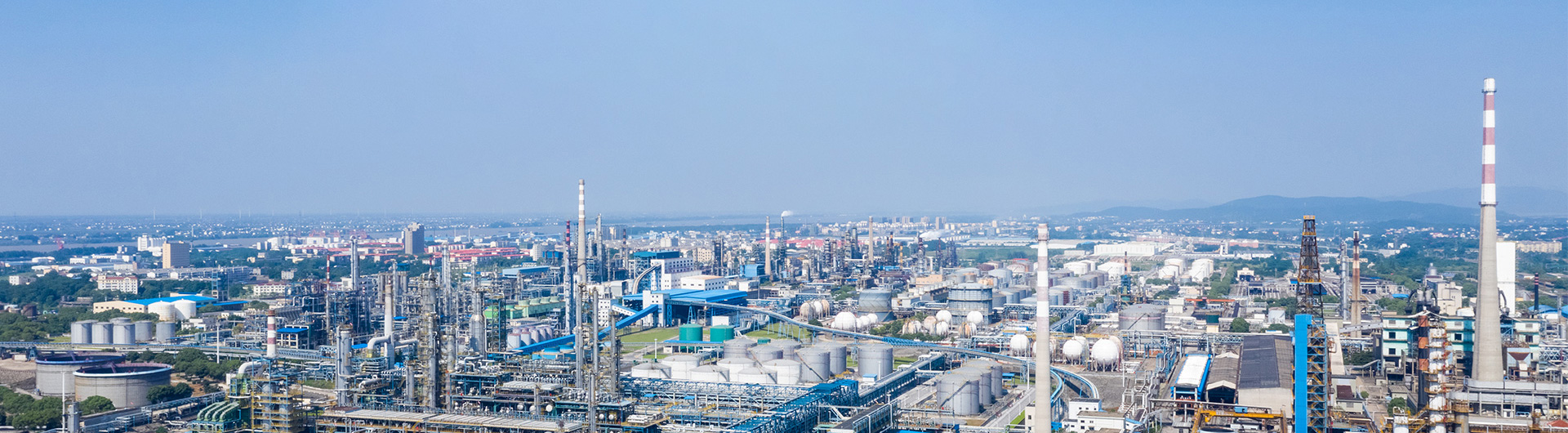
distillation columns are the core equipment in oil refining and petrochemical processes. They are responsible for separating and purifying various petrochemical products, from basic fuels to complex chemical raw materials, providing a pure material basis for subsequent production and processing.
The fine chemical field has extremely high requirements for product purity and quality, making the application of distillation columns particularly critical here. They can achieve precise separation of complex mixtures, ensuring that the final products meet the strict standards required for fine chemical production.
In the pharmaceutical manufacturing process, distillation columns also play an important role. They are used for the separation and purification of mixtures during drug synthesis, directly related to the safety and effectiveness of pharmaceuticals, and are a key link in ensuring the quality of pharmaceutical products.
Working Principle of Chemical Distillation Columns
The working principle of a distillation column is based on the difference in volatility of the components in the mixture. Simply put, it involves creating multiple processes of partial vaporization and partial condensation within the column. This causes the lighter components (usually low boilers) to more easily transfer to the gas phase, while the heavier components (usually high boilers) in the gas phase tend to transfer to the liquid phase. Through such repeated mass and heat transfer processes, effective separation of different components in the mixture is ultimately achieved.
Main Structure of Chemical Distillation Columns
A typical chemical distillation column usually consists of the following key components:
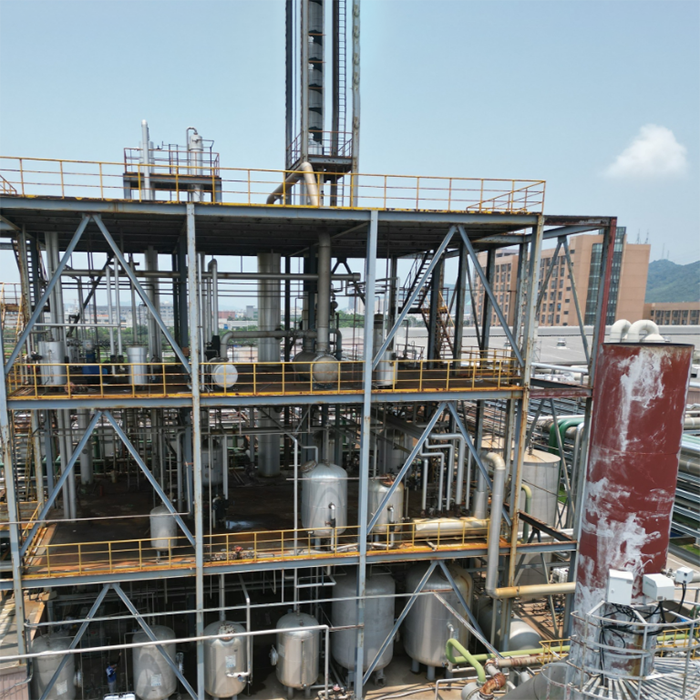
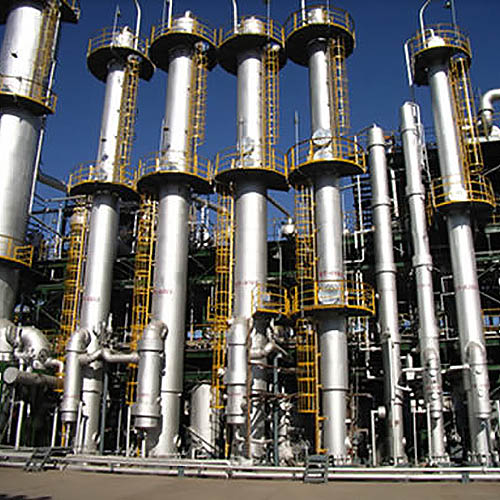
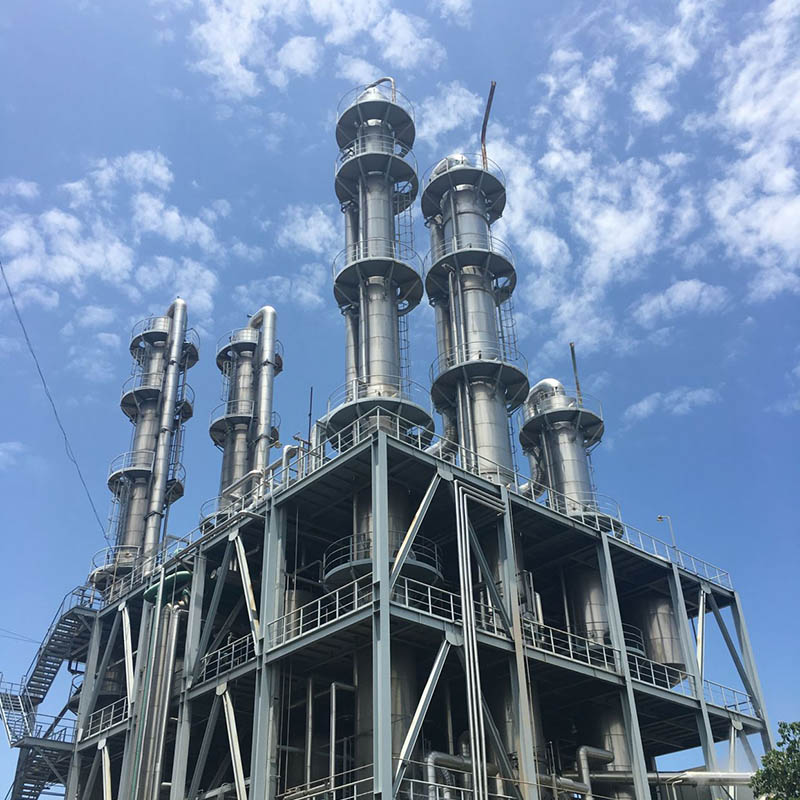
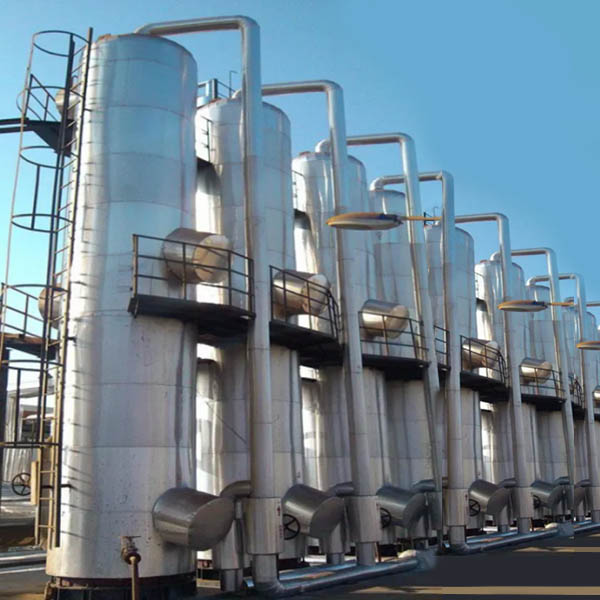
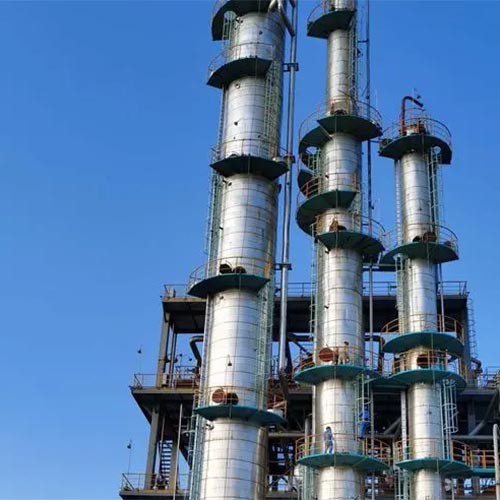
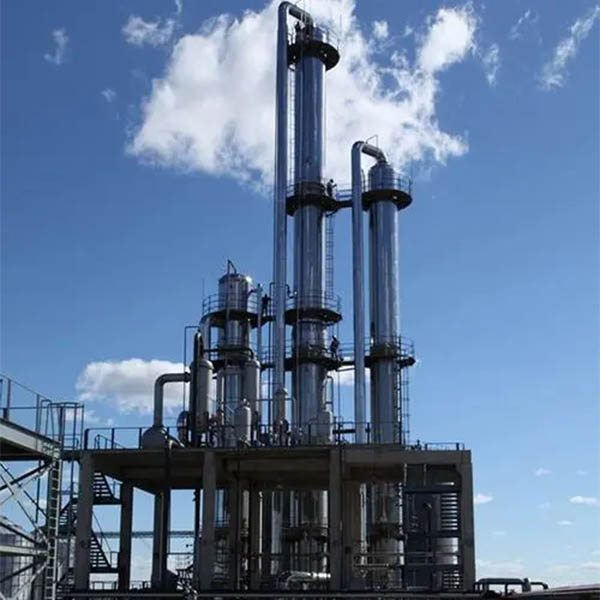
Distillation Column Shell: As the main body of the distillation column, it is usually a cylindrical shell that provides sufficient space for gas-liquid contact and mass transfer inside.
Condenser: Generally located at the top of the column, its function is to condense the vapor rising to the top of the column into liquid. A portion of this condensed liquid is withdrawn as product, and another portion is refluxed back into the column.
Reflux Drum: Used to collect the liquid condensed by the condenser and send a portion of the liquid back to the top of the column as reflux. Reflux is crucial for maintaining the separation conditions within the column and improving separation efficiency.
Reboiler: Usually installed at the bottom of the column, its function is to heat the bottom liquid (stillage), causing it to boil and generate vapor. This vapor serves as the rising gas phase and is one of the driving forces for the distillation process.
Main Classifications of Chemical Distillation Columns
According to the different ways of gas-liquid contact in the column, chemical distillation columns can be mainly divided into two categories:
Tray Columns: These columns achieve gas-liquid contact and mass/heat transfer through a series of trays installed inside. Gas rises from below the trays, passes through the liquid layer on the trays, and exchanges substances with the liquid. Common tray types have various designs to adapt to different operating conditions and separation requirements.
Packed Columns: Packed columns are filled with a certain height of packing inside the column. Liquid is sprayed from the top and flows along the surface of the packing, while gas flows upward through the packing layer, coming into contact with the liquid on the packing surface and undergoing mass transfer. Packing materials are diverse to provide a good gas-liquid contact area and mass transfer efficiency.
Design and Operation Considerations for Chemical Distillation Columns
The design and operation of distillation columns are crucial for their separation efficiency and operational stability:
Process Parameters: When designing and operating a distillation column, a series of key process parameters need to be carefully determined, such as operating pressure, number of theoretical trays or packing height, appropriate feed position, and reflux ratio. The reasonable selection of these parameters directly affects separation efficiency, product purity, and energy consumption.
Operating Flexibility: Refers to the ability of the distillation column to maintain stable operation and high separation efficiency when the throughput (load) fluctuates within a certain range. Good operating flexibility is very important for the stability and adaptability of industrial production.
Handling of Abnormal Phenomena: During the operation of a distillation column, some abnormal phenomena may occur, such as flooding (where liquid in the column cannot flow downward smoothly) and a sharp increase in pressure drop. Operators need to be able to promptly identify these problems and take effective measures to handle them to ensure the long-term stable operation of the distillation column.
In summary, chemical distillation columns, with their efficient separation capabilities, play an irreplaceable role in numerous industrial fields such as petrochemicals, fine chemicals, and pharmaceutical manufacturing. A deep understanding of their working principles, structural composition, classification, and key design and operation points is of great significance for optimizing production processes, improving product quality, and reducing energy consumption. With the continuous development of industrial technology, distillation column technology will also continue to progress, providing stronger support for the sustainable development of industrial production."