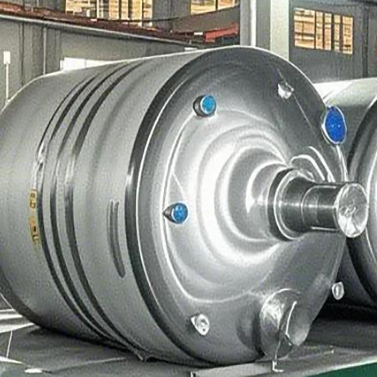
Hydrogenation Reactor: Core Equipment in Chemical Production, Comprehensive Analysis of Working Principle and Applications
Release time:2026-02-05
Visits:135
In the production chain of the chemical industry, there is a device that plays a crucial role - it can promote the efficient progress of catalytic hydrogenation reactions under high-pressure environments and is widely used in multiple industrial fields. This is the hydrogenation reactor. As a special high-pressure resistant equipment, the hydrogenation reactor ensures the full mixing of hydrogen, catalyst, and materials through precise structural design and scientific working principles, providing a stable reaction environment for chemical production. This article will comprehensively analyze the importance and operation mechanism of hydrogenation reactors from aspects such as working principle, core structure, and application fields.
Working Principle of Hydrogenation Reactor: The ""Art of Mixing"" for More Efficient Reactions
The core function of a hydrogenation reactor is to achieve full contact between hydrogen, catalyst, and materials through the synergistic effect of physics and chemistry, thereby accelerating the catalytic hydrogenation reaction. Its working principle can be summarized into three key links: ""mixing - circulation - reaction"":
Firstly, hydrogen needs to be uniformly mixed with materials. The reactor introduces hydrogen from the bottom of the container upwards through the gas distributor at the bottom, initially achieving contact between gas and materials. However, relying solely on the natural rise of gas is far from sufficient; the strong assistance of the agitation system is also required - the high-speed rotating stirring impeller can ""stir up"" materials, hydrogen, and catalyst, breaking stratification and allowing the three to fully integrate dynamically.
More importantly, the agitation system of the reactor adopts a ""self-priming combined stirring impeller"" design: the lower propeller-type stirring impeller is responsible for ""stirring up"" the catalyst sinking at the bottom to avoid catalyst accumulation; the middle self-priming stirring impeller forms a local vacuum through high-speed rotation, ""sucking in"" the hydrogen at the top of the container through the hollow shaft and dispersing it into tiny bubbles, which are then integrated into the materials; the upper disc turbine-type or propeller-type stirring impeller further strengthens the mixing effect to ensure uniformity of the entire reaction system. This multi-layer agitation design maximizes the contact area between hydrogen, catalyst, and materials, fundamentally improving reaction efficiency.
Core Structure: Precision Design Supports Stable Operation
The efficient operation of the hydrogenation reactor is inseparable from its scientific structural design. In addition to the above-mentioned agitation system, several core components work together to ensure the stability and safety of the reaction:
- Gas Distributor: Installed at the lower part of the reactor body, it is responsible for uniformly dispersing hydrogen into fine bubbles, which enter the materials from the bottom, laying the foundation for initial mixing.
- Hollow Shaft Structure: The stirring shaft is designed to be hollow. When the self-priming stirring impeller rotates at high speed, a vacuum is formed around the impeller blades. The hydrogen at the top of the container is ""transported"" to the lower part of the equipment through the hollow shaft under pressure, and then thrown into the materials by the rotating impeller blades, forming a large number of tiny bubbles, which greatly improves the dissolution and reaction efficiency of hydrogen.
- Pressure-Resistant Vessel Body: As the ""carrier"" of the reaction, the vessel body must have high strength and high-pressure resistance to ensure no leakage under the high-pressure environment (usually accompanied by high temperature) of hydrogenation reactions, ensuring production safety.
Wide Applications: An ""Industrial All-Rounder"" Across Multiple Fields
Hydrogenation reactors have a wide range of application scenarios, covering almost multiple core fields of the chemical industry:
- Petrochemical Industry: Used in processes such as oil hydrorefining and olefin hydrogenation to improve fuel quality or produce chemical raw materials;
- Pharmaceuticals and Dyes: In drug synthesis and dye intermediate production, specific functional groups are introduced through hydrogenation reactions to optimize product performance;
- Rubber and Pesticides: Participate in rubber vulcanization and hydrogenation reduction reactions of pesticide intermediates to ensure product purity and yield;
- Food Industry: Used for hydrogenation treatment of certain food additives to improve product stability and taste.
It can be said that from basic chemical raw materials to end consumer goods, hydrogenation reactors are indispensable key equipment in the production process.
Catalysts and Reaction Efficiency: Making Every Bit of Raw Material ""Fully Utilized""
The efficiency of catalytic hydrogenation reactions largely depends on the activity and dispersibility of the catalyst. Common catalysts include palladium-carbon, nickel powder, activated carbon, etc. These catalysts have high density and tend to settle at the bottom of the reactor. At this time, the lower propeller-type stirring impeller plays a key role: it can ""stir up"" the deposited catalyst from the bottom of the head, push the catalyst to circulate upward along the inner side of the head, and flow along the cylinder, ensuring that the catalyst is always in full contact with the materials during the reaction, avoiding ""idleness"", thus making the reaction more thorough and improving raw material utilization.
Summary: Hydrogenation Reactor - The ""Efficiency Engine"" of Chemical Production
As the core equipment for catalytic hydrogenation reactions, hydrogenation reactors achieve efficient mixing of hydrogen, catalyst, and materials through precise structural design (such as self-priming agitation system, hollow shaft, gas distributor) and scientific working principles, providing a stable and reliable reaction environment for production in petroleum, chemical, pharmaceutical, and other fields. Its improvement of reaction efficiency and optimization of raw material utilization make it an indispensable ""efficiency engine"" in modern chemical industry. Whether pursuing improvement in product quality or stability in the production process, hydrogenation reactors play an irreplaceable role."