Extraction Equipment: Detailed Explanation of Working Principle, Main Types and Application Fields
Release time:2026-05-04
Visits:217
In industrial production, achieving efficient separation of substances is a key link to improve production efficiency and product quality. As a mass transfer equipment specifically used for liquid-liquid or solid-liquid extraction operations, extraction equipment realizes component separation by promoting two-phase contact and plays an irreplaceable role in multiple industrial fields. This article will detail the working principle, main types and application scenarios of extraction equipment to help you fully understand this important equipment.
I. What is Extraction Equipment?
Extraction equipment is a device that realizes component separation through mass transfer process based on the distribution difference of substances in different phases (usually liquid-liquid, solid-liquid). Its core function is to promote full contact between the two phases through specific structural design, so that the target components are transferred from one phase to another, so as to achieve the purpose of separation and purification. Whether it is raw material purification in chemical production or pollutant treatment in the environmental protection field, extraction equipment has become a key equipment with its efficient separation ability.
II. Working Principle of Extraction Equipment
The working principle of extraction equipment is essentially the distribution difference of substances between two phases. When two immiscible (or partially miscible) liquids (or solid-liquid systems) are in contact, one or more components will spontaneously transfer from the phase with low solubility to the phase with high solubility due to their different solubilities in the two phases. To accelerate this process, extraction equipment usually promotes phase contact through stirring, flowing, etc., to form dispersed phase droplets, increase the mass transfer area, and finally realize two-phase stratification through standing, centrifugation, etc., to complete the separation.
III. Main Types of Extraction Equipment
According to different structures and working methods, extraction equipment can be divided into three categories: mixer-settlers, extraction columns and centrifugal extractors. Each type of equipment is suitable for different separation scenarios and process requirements.
1. Mixer-Settler: A Classic Choice for Stagewise Contact
Mixer-settler is one of the most common extraction equipment, which consists of a mixing chamber and a settling chamber, belonging to stagewise contact mass transfer equipment.
- Mixing Chamber: Equipped with an agitator, which breaks the two-phase liquid into small droplets through mechanical stirring to promote full mixing and mass transfer of components.
- Settling Chamber: A hollow chamber with a large horizontal cross-sectional area. Some equipment will be equipped with guide plates or wire mesh to help and stratify the dispersed phase droplets and realize two-phase separation.
According to the separation requirements, the mixer-settler can be used in a single stage (suitable for simple separation) or in cascade combination (multi-stage series) to improve separation efficiency and meet high-purity separation requirements.
2. Extraction Column: Continuous Mass Transfer Equipment with Countercurrent Flow
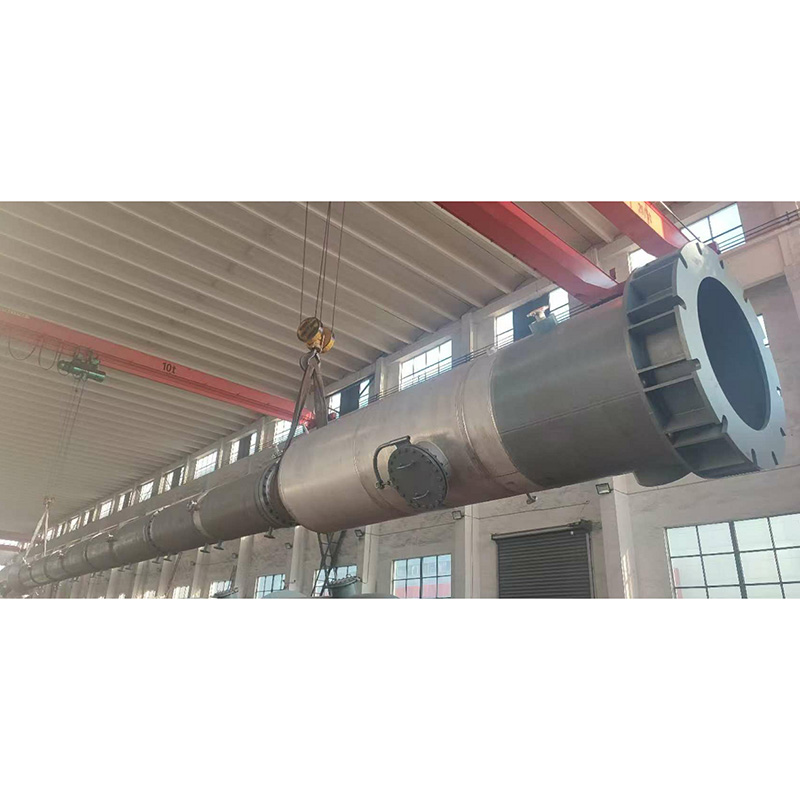
Extraction column is a tower equipment for continuous extraction. The tower body is a vertical cylinder, and mass transfer is realized through countercurrent flow of two phases. Common types include packed column, sieve plate column, rotating disc column, pulsed column and vibrating plate column, etc.
- Working Process: The light phase (liquid with smaller density) enters from the bottom of the tower, rises along the tower and overflows from the top; the heavy phase (liquid with larger density) is added from the top of the tower, descends along the tower and is exported from the bottom. The two phases flow countercurrently in the tower to complete mass transfer.
- Structural Characteristics: The middle part of the tower is the working section, which is the core area for two-phase contact and mass transfer; the two ends are separation sections, which are respectively used for the aggregation and stratification of dispersed phase droplets and the sedimentation separation of entrained droplets in the continuous phase. Except for sieve plate columns, most extraction columns are differential contact mass transfer equipment, suitable for large-scale continuous production.
3. Centrifugal Extractor: Strengthening Separation by Centrifugal Force
Centrifugal extractor is a special equipment that uses centrifugal force to accelerate the sedimentation and stratification of droplets. It can make the droplets more by intensifying stirring, thereby greatly improving the mass transfer efficiency. Its core advantages are fast separation speed and small floor area, especially suitable for systems with small density difference and difficult stratification.
- Classification:
- Stagewise Contact Type: Agitators are installed in the centrifugal separator to form a single-stage or multi-stage structure (such as Luwesta tower type, cylindrical centrifugal extractor), suitable for scenarios requiring multi-stage separation.
- Differential Contact Type: The drum is equipped with multiple layers of concentric cylinders, and the cylinder wall is perforated to make the liquid form a film or droplet dispersion (such as Podbielniak centrifugal extractor), realizing efficient continuous mass transfer.
IV. Application Fields of Extraction Equipment
With efficient separation ability, extraction equipment is widely used in many industrial fields:
- Chemical and Petroleum Industry: Used in raw material purification, solvent recovery, product refining and other processes, such as component separation in organic synthesis.
- Nuclear Industry: In nuclear fuel processing, radioactive substances are separated through extraction to ensure production safety.
- Environmental Protection Field: Treat industrial wastewater, oily sewage, etc., remove pollutants, and realize water resource recycling.
- Pharmaceutical and Fine Chemical Industry: In the extraction of pharmaceutical intermediates, separate active ingredients to improve product purity; also used for the purification of fine chemicals such as spices and dyes.
Summary
Extraction equipment realizes efficient component separation by utilizing the distribution difference of substances between two phases, and is a key equipment in chemical industry, environmental protection, pharmaceutical and other fields. Whether it is the stagewise contact mixer-settler, the continuous mass transfer extraction column, or the high-efficiency centrifugal extractor, they all play an important role in their respective application scenarios. With the development of industrial technology, the structural design and separation efficiency of extraction equipment will be continuously optimized to provide support for production needs in more fields."