Industrial Extraction Tower: Comprehensive Analysis of Working Principle, Core Advantages, and Application Fields
Release time:2026-04-27
Visits:193
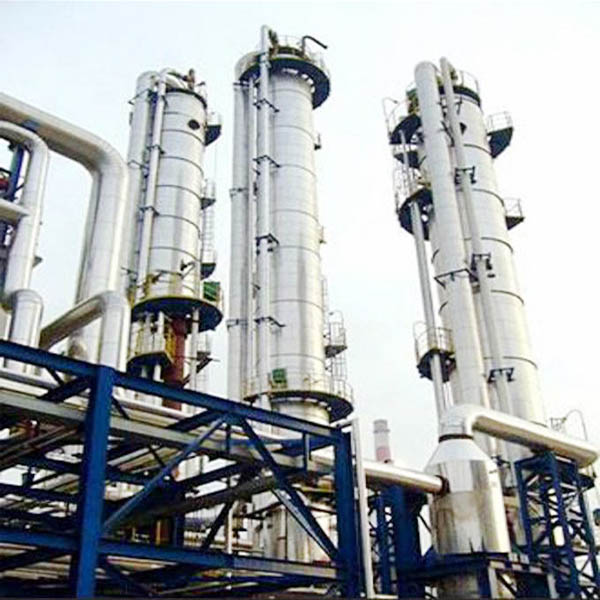
Industrial extraction towers are indispensable separation equipment in various industries such as chemicals, pharmaceuticals, petroleum, and food. They achieve efficient separation and purification of mixtures by utilizing differences in the solubility of substances in solvents. Whether it is component extraction in complex chemical processes or purity enhancement in the pharmaceutical field, extraction towers, with their unique structure and performance, have become key tools in modern industrial production.
Working Principle of Industrial Extraction Towers: Separation Mechanism Based on Solubility Differences
The core working principle of an extraction tower is to utilize the difference in solubility of different substances in a specific solvent to achieve the separation of components in a mixture through sufficient contact and equilibrium within the tower.
Specifically, the mixture to be separated typically enters from the top of the tower, while the solvent is introduced from the bottom or a specific position. The packing (such as structured packing or random packing) filled inside the tower provides a large contact surface area, allowing the mixture and solvent to fully contact. Under the action of gravity or external forces (such as stirring or pulsation), the two liquids (mixture and solvent) flow countercurrently in the tower, and the solute transfers from the liquid phase with lower solubility to the liquid phase with higher solubility. After a period of contact and mass transfer, different components gradually enrich at different heights of the tower and are finally collected separately from the outlet at the top or bottom of the tower to achieve the separation purpose.
Core Advantages of Industrial Extraction Towers: Why They Are the Preferred Equipment for Industrial Separation?
Compared with traditional separation methods (such as distillation and filtration), industrial extraction towers are widely used in various industries due to the following advantages:
1. High Separation Efficiency, Suitable for Complex Mixtures
Through the large contact area provided by the packing and the long contact time of liquids in the tower, extraction towers can significantly improve the mass transfer efficiency between solute and solvent. Even for complex mixtures with close boiling points or thermal sensitivity (such as active ingredients in pharmaceuticals and complex hydrocarbons in petroleum), precise separation can be achieved, with separation purity much higher than that of simple precipitation or filtration.
2. Wide Range of Applications, Meeting Multi-scenario Needs
From organic matter extraction in the chemical industry, crude oil separation in the petroleum industry, to drug purification in the pharmaceutical field, and natural ingredient extraction in the food industry (such as plant essential oils and food additives), extraction towers can adapt to the separation needs of different material systems. Whether it is water-organic phase separation or liquid-liquid extraction, its flexible operation mode can cover multiple industrial scenarios.
3. Energy Saving and Environmental Protection, Reducing Industrial Costs and Environmental Impact
The separation process of extraction towers is usually carried out at room temperature or lower temperatures without high-temperature heating. Compared with methods that require a lot of heat energy such as distillation, the energy consumption is significantly reduced. At the same time, the efficient separation performance reduces raw material waste and by-product generation, lowers subsequent treatment costs and environmental pressure, and conforms to the trend of modern industrial ""green production"".
4. Controllable Operation Process, Flexibly Adjusting Separation Effect
The extraction tower can precisely control the separation process by adjusting the temperature, pressure, solvent concentration, or liquid flow rate in the tower. For example, in pharmaceutical production, the purity of target components can be improved by adjusting the solvent ratio; in wastewater treatment, the removal efficiency of pollutants can be improved by optimizing operating parameters to meet separation requirements in different scenarios.
5. Long-term Economic Efficiency, Reducing Comprehensive Production Costs
Although the initial equipment investment of
extraction towers may be higher than that of simple separation equipment, their efficient separation capacity can reduce subsequent purification steps (such as multiple crystallization and rectification), reducing raw material loss and energy consumption. In the long run, the output of high-purity products and stable operation performance can significantly reduce comprehensive production costs and improve the economic benefits of enterprises.
Main Application Fields of Industrial Extraction Towers: Comprehensive Coverage from Laboratory to Industrial Production
With the above advantages, industrial extraction towers have become core equipment in many fields, with specific application scenarios including:
Chemical and Petroleum Industry
In chemical production, extraction towers are used to separate organic compounds (such as separation of aromatics and non-aromatics) and purify fine chemical raw materials; in the petroleum industry, they can be used for crude oil desulfurization, lubricating oil refining, and component extraction from shale oil and coal tar to improve product quality.
Pharmaceutical and Bioengineering
In the pharmaceutical field, extraction towers are key equipment for extracting active pharmaceutical ingredients, such as extracting alkaloids from plants and separating antibiotics from fermentation broth, improving drug purity and safety through precise separation. In bioengineering, they are also commonly used for the separation and purification of bioactive substances such as proteins and enzymes.
Food and Beverage Industry
In food processing, extraction towers can be used for the extraction of natural pigments, spices, and vitamins (such as extracting carotene and tea polyphenols from plants), as well as the refining of edible oils and decolorization of sugar solutions, ensuring the purity and safety of food ingredients.
Environmental Protection and Wastewater Treatment
Industrial wastewater often contains refractory organic matter or heavy metal ions. By selecting appropriate solvents, extraction towers can efficiently remove pollutants (such as phenols and heavy metals) from wastewater, realizing wastewater purification and resource recovery, and reducing environmental pollution.
Key Design Considerations for Industrial Extraction Towers: How to Ensure Separation Effect and Stability?
When designing an industrial extraction tower, the following factors need to ensure that the equipment performance matches the separation requirements:
Tower Dimensions: Reasonable Matching of Diameter and Height
The tower diameter needs to be calculated based on liquid flow rate and operating speed: the tower cross-sectional area is obtained by dividing the liquid volume flow rate by the allowable operating flow rate (such as 70%-80% of the flooding velocity), and then the tower diameter is determined. The height of the working section of the tower needs to be determined by calculating the height of a transfer unit (HTU) or the height equivalent to a theoretical plate (HETP) in combination with the properties of the material system (such as mass transfer coefficient, distribution coefficient) and separation requirements (such as number of theoretical plates), to ensure that the solute has sufficient contact time to complete mass transfer.
Packing Selection: The Core of Improving Contact Efficiency
The type of packing (such as Raschig rings, Pall rings, wire mesh packing, etc.) directly affects the mass transfer efficiency. Appropriate packing should be selected according to the viscosity, density difference, corrosiveness and other characteristics of the material system. For example, high-viscosity material systems are suitable for large-pore packing to reduce flow resistance; easy-foaming material systems need to select structured packing that is not easy to block.
Conclusion: Industrial Extraction Tower - The ""Efficient Engine"" of Modern Industrial Separation
As a separation equipment based on solubility differences, industrial extraction towers, with their high separation performance, wide application scenarios, energy-saving and environmental protection advantages, have become core tools in the chemical, pharmaceutical, petroleum, food and other industries. From the purification of complex mixtures to the treatment of environmental wastewater, from laboratory research and development to large-scale industrial production, extraction towers play a key role in improving product quality, reducing production costs, and promoting the development of green industry.
With the advancement of material technology (such as the development of new high-efficiency packing) and process optimization (such as intelligent operation control), industrial extraction towers will further improve separation efficiency, expand application fields, and provide support for the high-quality development of more industries in the future."