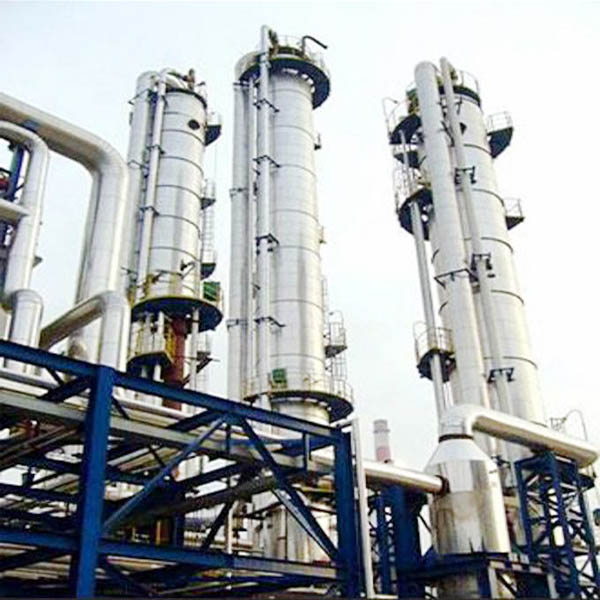
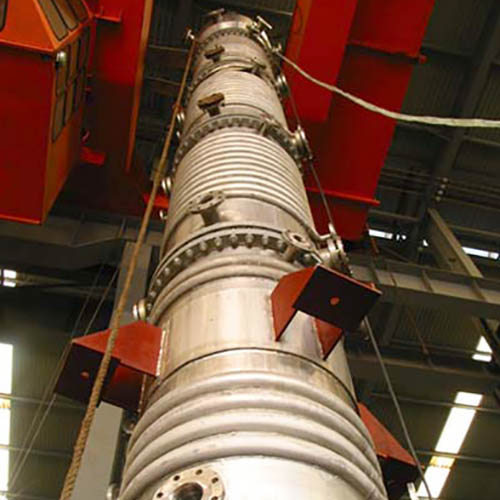
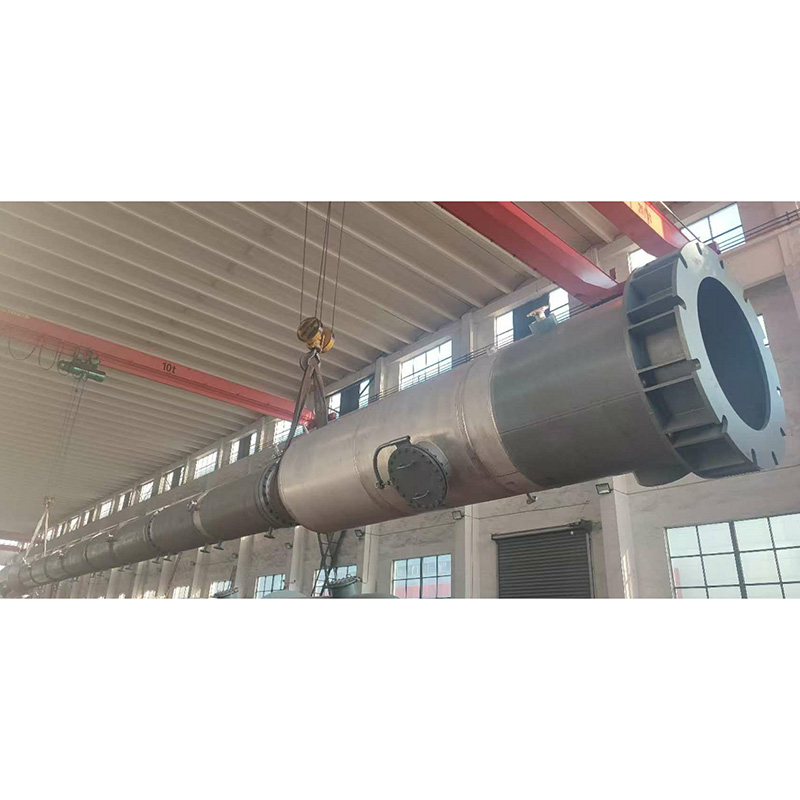
In industrial production, evaporation is a key process for solution concentration and purification. The multi-effect falling film evaporator, with its high efficiency and energy-saving characteristics, has become core equipment in industries such as chemical engineering, pharmaceuticals, and food processing. By optimizing material flow and energy utilization, it enhances production efficiency while reducing energy consumption, making it an important choice for modern industries pursuing green production. This article comprehensively analyzes the value of multi-effect falling film evaporators in terms of working principles, core advantages, potential challenges, and application fields.
I. Working Principle of Multi-Effect Falling Film Evaporator: From Liquid Film Formation to Energy Circulation
The high efficiency of multi-effect falling film evaporators stems from their unique working mechanism, which mainly consists of four core steps:
1. Uniform Material Distribution: The Foundation of Liquid Film Flow
After entering the equipment from the top of the heating chamber, the material is evenly distributed onto the inner wall of each heating tube through a precision liquid distributor. Under the action of gravity, the material flows downward along the tube wall in the form of a uniform liquid film, ensuring that every inch of heat transfer area is fully utilized.
2. Heating and Evaporation: Rapid Realization of Gas-Liquid Conversion
During the flow of the liquid film inside the tube, it exchanges heat with the heating medium (such as steam) outside the tube. Heat is transferred through the tube wall to the liquid film, causing part of the liquid to quickly evaporate into secondary steam, achieving preliminary concentration of the solution.
3. Gas-Liquid Separation: Improving Product Purity
The ""steam-liquid mixture"" drawn from the bottom of the heating tube enters the gas-liquid separator. Through physical separation technologies (such as centrifugal separation and gravitational sedimentation), the steam is separated from the concentrated liquid, ensuring the steam is free of impurities and the liquid reaches the target concentration.
4. Secondary Steam Recovery: The Core Energy-Saving Design
Instead of being directly discharged, the separated secondary steam is pressurized and heated by a compressor and then returned to the heating chamber as a heating source. This ""multi-effect utilization"" mechanism significantly reduces reliance on external energy sources and is the key to the equipment's energy efficiency.
II. Core Advantages of Multi-Effect Falling Film Evaporator: Why It Becomes the Industrial First Choice?
Compared with traditional evaporation equipment, the advantages of multi-effect falling film evaporators are concentrated in three dimensions: ""high efficiency"", ""energy saving"", and ""flexibility"":
1. High Heat Transfer Efficiency, Accelerating Production Speed
The liquid film flow ensures full contact between the material and the inner wall of the heating tube, resulting in a much higher heat transfer area utilization rate than traditional equipment. Combined with the turbulent flow of the liquid film, the heat transfer coefficient is significantly improved, thereby speeding up evaporation and shortening the production cycle.
2. Short Residence Time, Protecting Heat-Sensitive Materials
The material has a short residence time in the equipment (usually only a few seconds to a few minutes), which can effectively prevent heat-sensitive components (such as nutrients in food and active ingredients in pharmaceuticals) from degrading due to long-term heating. It is particularly suitable for industries with heat-sensitive requirements.
3. Low Energy Consumption Design, Reducing Operating Costs
Through multi-effect recovery and utilization of secondary steam, the energy consumption of the equipment is only about 1/3 of that of traditional falling film evaporators. In long-term operation, the cost advantages brought by energy savings can effectively cover the initial investment, maximizing economic benefits.
4. Flexible Operation, Adapting to Complex Working Conditions
The equipment has a compact structure and small footprint. The number of evaporation effects (such as double-effect, triple-effect, etc.) can be adjusted according to production needs. The operation process is simple, and maintenance costs are low. It can maintain stable operation even when handling high-concentration and high-viscosity solutions.
5. Wide Application Range, Covering Multi-Industry Needs
Whether it is solution concentration in the chemical industry, purification processes in the pharmaceutical industry, or juice concentration and milk processing in the food industry, multi-effect falling film evaporators can adapt to different material characteristics and meet diverse production needs.
III. Potential Challenges to Note: The Key to Rational Selection
Despite its significant advantages, the application of multi-effect falling film evaporators still requires attention to the following points to ensure optimal equipment performance:
1. High Initial Investment, Requiring Long-Term Benefit Balance
Compared with traditional evaporators, multi-effect falling film evaporators have higher equipment and installation costs. Enterprises need to evaluate whether long-term energy-saving benefits can cover the initial investment based on factors such as production scale and energy consumption requirements.
2. Distributor Performance Directly Affects Evaporation Effect
The liquid distributor is the ""heart"" of the equipment, and its design and manufacturing precision directly determine whether the liquid film is uniform. If the distribution is uneven, it is easy to cause local dry walls and reduced heat transfer efficiency. Therefore, it is necessary to choose professional manufacturers to ensure the quality of the distributor.
3. Strict Installation Requirements, Relying on Professional Teams
The equipment has high requirements for installation verticality and pipeline connection accuracy. Improper installation may lead to uneven liquid film distribution, equipment vibration, and other problems, requiring construction and commissioning by experienced teams.
IV. Application Fields of Multi-Effect Falling Film Evaporator: From Laboratory to Industrial Production
With its excellent performance, multi-effect falling film evaporators have been deeply applied in multiple industries:
Chemical Industry: Solution Concentration and Resource Recovery
It is used for concentration and purification of various chemical solutions (such as acid-base solutions and organic solutions), reducing waste liquid discharge and realizing resource recycling.
Pharmaceutical Industry: Precisely Controlled Purification Processes
In pharmaceutical production, it performs low-temperature concentration of traditional Chinese medicine extracts and western medicine intermediates to protect the activity of active ingredients and meet strict pharmaceutical production standards.
Food Industry: Nutrient-Retaining Concentration Processing
It is used for concentration of food such as fruit juices, milk, and syrups, reducing nutrient loss in a low-temperature environment and improving product taste and shelf life.
Petrochemical and Metallurgical Industries: Efficient Separation and Environmental Protection Treatment
It treats wastewater in the petrochemical industry and electrolyte in the metallurgical industry, realizing the recovery of useful components and removal of harmful substances in the solution, in line with environmental protection requirements.
V. Conclusion: The Preferred Choice for Efficient and Energy-Saving Industrial Evaporation
Multi-effect falling film evaporators, with their advantages of high heat transfer efficiency, low energy consumption, and flexible operation, have become an ideal choice for modern industrial evaporation. Although the initial investment is high, their long-term energy-saving benefits and wide applicability can bring significant economic and environmental value to enterprises. When selecting equipment, it is recommended to combine material characteristics (such as heat sensitivity and viscosity), production scale, and process requirements, and conduct professional evaluations to achieve precise matching between equipment and needs, so that efficient evaporation technology can truly serve production upgrading.
Whether it is chemical enterprises pursuing green production or food and pharmaceutical industries focusing on product quality, multi-effect falling film evaporators will become an important to improve efficiency and reduce costs."