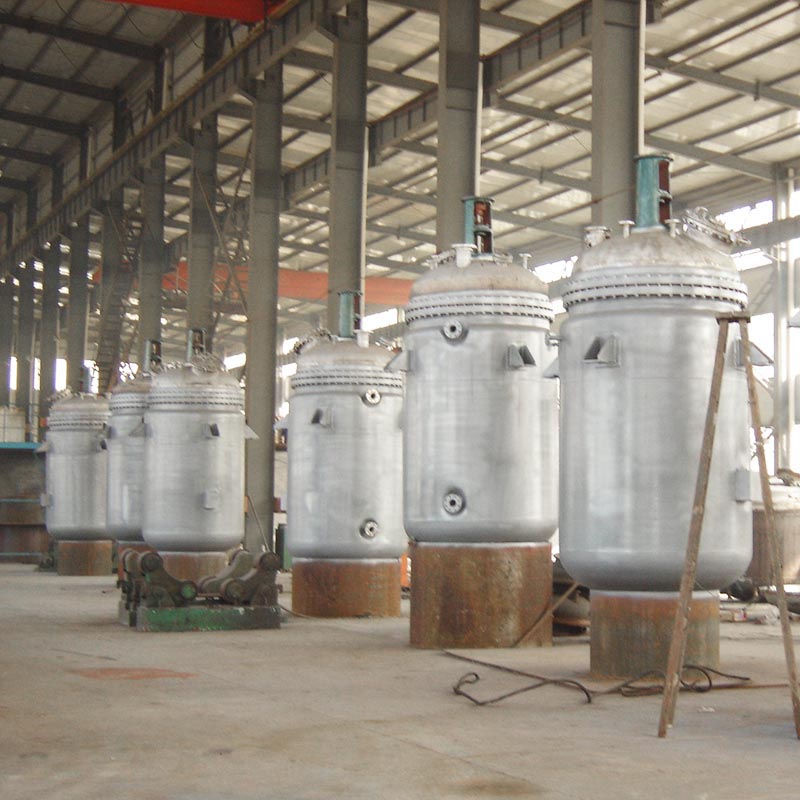
High-Pressure Reactor: Core Features and Widely Applications of Multifunctional Reaction Equipment
Release time:2026-03-30
Visits:228
In modern scientific research and industrial production, many chemical reactions and material preparation processes need to be carried out under extreme conditions, and **high-pressure reactor** is exactly the key equipment to meet this demand. It can provide a stable and controllable space for various reactions in high-temperature and high-pressure environments, promoting technological breakthroughs and industrial development in multiple fields such as chemistry, chemical engineering, medicine, and food. This article will detailedly analyze the definition, core features and application value of high-pressure reactors in different fields.
What is a High-Pressure Reactor?
A
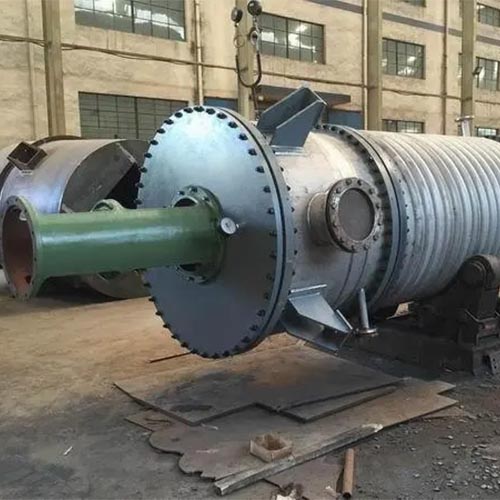
high-pressure reactor is a pressure vessel specially designed for chemical reactions, physical changes or material preparation under high-temperature and high-pressure conditions. Its core function is to provide a closed and controllable environment for reactions, enabling reactions that are difficult to occur under normal temperature and pressure (such as vulcanization, nitration, hydrogenation, polymerization, etc.) to proceed efficiently and safely. Whether it is small-scale research in laboratories or large-scale preparation in industrial production, high-pressure reactors play an indispensable role.
Core Features of High-Pressure Reactor: Why Can It Adapt to Complex Reaction Requirements?
1. High Temperature and High Pressure Resistance: Breaking Through Reaction Condition Limitations
The most prominent feature of high-pressure reactors is their ability to withstand extreme environments. They can withstand high temperatures of hundreds of degrees Celsius and pressures of tens or even hundreds of megapascals, making many reactions that require harsh conditions (such as high-temperature cracking, high-pressure hydrogenation, etc.) possible. This characteristic allows researchers and enterprises to explore more possibilities of chemical reactions and promote the research and development of new materials and processes.
2. Material Diversity: Adapting to Different Reaction Media
The choice of reactor body material directly affects the stability and safety of the reaction. High-pressure reactors usually use corrosion-resistant materials such as stainless steel, Hastelloy, titanium-nickel-zirconium, etc. These materials can resist the erosion of various media such as acids, alkalis, and organic solvents, ensuring that there will be no pollution or equipment damage due to material corrosion during the reaction process. Choosing the appropriate material according to the characteristics of the reaction medium is the basis for ensuring the reaction effect.
3. Efficient Stirring System: Improving Reaction Uniformity and Efficiency
In order to make reactants fully contact and increase reaction rate, high-pressure reactors are equipped with efficient stirring systems. Through the reasonable design of stirring paddles (such as anchor type, paddle type, turbine type, etc.), the materials can be uniformly mixed in the reactor, avoiding problems such as excessive local concentration or uneven temperature, thereby improving reaction efficiency and product quality.
4. Flexible Temperature Control: Precisely Adjusting the Reaction Environment
Temperature is a key factor affecting the reaction process. High-pressure reactors achieve precise temperature control through various heating and cooling methods. Common heating methods include electric heating, electromagnetic heating, far-infrared heating, heat-conducting oil heating, etc., and the cooling system can achieve rapid cooling through cold water circulation or low-temperature media. This flexible temperature control ability keeps the reaction process always in the optimal temperature range.
5. Multiple Safety Protections: Ensuring Operation Safety
Reactions under high-pressure environments have certain risks, so safety design is a core consideration for high-pressure reactors. The equipment is usually equipped with safety explosion devices (to prevent overpressure), high-precision pressure gauges (real-time pressure monitoring), temperature controllers (to avoid overheating), etc., and some are equipped with emergency shutdown systems to comprehensively protect the safety of operators and equipment.
6. Reliable Sealing Performance: Preventing Leakage and Pollution
The tightness of the reaction process is directly related to product purity and operation safety. High-pressure reactors adopt technologies such as magnetic sealing, mechanical sealing or packing sealing, which can effectively prevent reactant leakage and external impurities from entering, avoid cross-contamination, and are especially suitable for fields such as medicine and food that have high purity requirements.
7. Automated Control: Realizing Precise and Remote Operation
With the development of industrial automation, many high-pressure reactors are equipped with automated control systems. Through sensors and intelligent control modules, parameters such as temperature, pressure, and stirring speed can be monitored and adjusted in real time, and even remote operation and data recording are supported, which not only improves the accuracy of the reaction but also reduces the error and risk of manual operation.
Widely Applications of High-Pressure Reactor: Empowering Multiple Fields from Scientific Research to Industry
Petrochemical Field: Promoting Key Reaction Processes
In the petrochemical industry, high-pressure reactors are the core equipment for processes such as hydrogenation reactions, cracking reactions, and polymerization reactions. For example, heavy oil hydrodesulfurization needs to be carried out under high temperature and high pressure. High-pressure reactors can provide a stable reaction environment for catalysts and raw materials, improving desulfurization efficiency; the synthesis of polyolefin polymer materials also relies on the high-pressure conditions it provides to promote the polymerization of monomers into polymer chains.
Pharmaceutical Field: Assisting Drug Synthesis and R&D
The pharmaceutical industry has extremely high requirements for the accuracy of reaction conditions and product purity, and high-pressure reactors play an important role here. Whether it is the synthesis of antibiotics, the preparation of drugs, or the research and development of new targeted drugs, catalytic reactions need to be carried out in a controllable high-temperature and high-pressure environment. The sealing performance and precise temperature control ability of high-pressure reactors ensure the efficiency and purity of drug synthesis.
Food Processing Field: Optimizing the Preparation of Food Additives
In the food industry, the synthesis of many food additives (such as flavors, pigments, preservatives, etc.) requires specific reaction conditions. High-pressure reactors can be used for the high-temperature synthesis or fermentation process of food additives. For example, the catalytic reaction of certain enzymes can be accelerated through a high-pressure environment, improving production efficiency while ensuring the safety and stability of additives.
Materials Science and Nanotechnology: Empowering New Material R&D
In the field of materials science, high-pressure reactors are key equipment for synthesizing special materials (such as ceramics, superconducting materials, composite materials). For example, nanomaterials with special structures can be prepared under high temperature and high pressure conditions, and their particle size and performance can be precisely controlled through reaction parameters; the synthesis of new battery materials also relies on the extreme environment provided by high-pressure reactors to optimize the electrochemical performance of materials.
Genetic Engineering and Life Sciences: Supporting Biological Reaction Research
In gene technology and protein expression research, high-pressure reactors can be used to simulate extreme environments in organisms or provide stable pressure and temperature conditions for enzyme-catalyzed reactions and cell culture. For example, the cultivation of some extremophiles requires a high-pressure environment, and high-pressure reactors can provide a controllable experimental platform for such research, promoting exploration in the field of life sciences.
Conclusion: High-Pressure Reactor - ""Multifunctional Reaction Engine"" for Scientific Research and Industry
As a device integrating features such as high temperature and high pressure resistance, material adaptability, precise temperature control, safety and reliability, high-pressure reactors are not only tools for exploring the laws of chemical reactions in laboratories but also core equipment for achieving efficient and high-quality preparation in industrial production. From petrochemicals to pharmaceutical R&D, from food processing to nanomaterial synthesis, its applications run through multiple fields, providing solid equipment support for technological innovation and industrial upgrading. With the advancement of automation technology and materials science, high-pressure reactors will continue to play an important role in more cutting-edge fields, promoting the in-depth integration of scientific research and industry."