Stainless Steel Distillation Tower: Functions, Advantages, and Purchase Guide
Release time:2026-03-27
Visits:251
As a key chemical equipment, the stainless steel distillation tower plays an indispensable role in modern industrial production. With its excellent performance, it is widely used in numerous important fields such as petrochemical, metallurgy, light industry, textile, pharmaceutical, pesticide, electroplating, and electronics. The core reason for its application in such a wide range of industries lies in its series of excellent characteristics, such as high strength ensuring stable operation of the equipment, good toughness making it not easily damaged under complex working conditions, outstanding high temperature and corrosion resistance guaranteeing its service life in various harsh environments, and relatively light specific gravity facilitating the installation and maintenance of the equipment.
I. What is a Stainless Steel Distillation Tower?
A
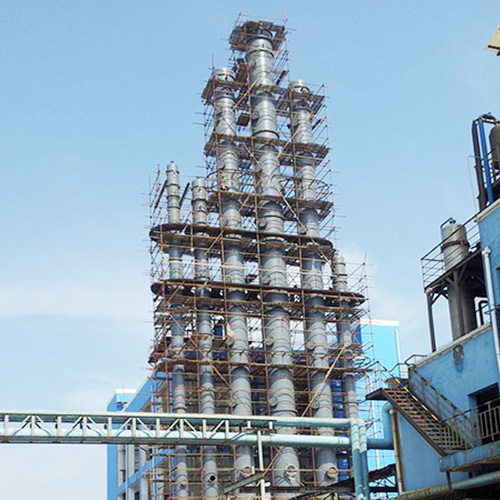
stainless steel distillation tower is essentially an efficient device used for separating mixed liquids. Its working principle is based on the different volatilities (i.e., boiling points) of different liquids under specific conditions, mainly temperature differences. By precisely controlling these conditions, the separation and purification of each component in the mixed liquid are achieved. This process is crucial for obtaining high-purity target products and is a core link in many industrial production processes.
II. Core Functions and Types of Stainless Steel Distillation Towers
The main function of a stainless steel distillation tower is to separate and purify mixed liquids. According to its internal structure and working method, distillation towers can be mainly divided into two types:
Tray Tower: This is a relatively common type in industrial applications. Its basic structure usually includes three key components: trays, reboilers, and condensers. Liquids contact and transfer mass on the trays, and through multiple evaporations and condensations, the separation of components is gradually achieved.
Thin-Film Tower (Packed Tower): Different from tray towers, the thin-film tower is filled with specific packing inside. These packings provide a large contact area for the rising vapor and falling liquid, allowing the evaporated solvent to circulate fully under the action of baffles and reflux liquid. By reasonably adjusting the overall height of the tower and the type and filling method of the packing, the purity of the discharged solvent can be effectively controlled and adjusted to meet different process requirements.
III. Advantages of Stainless Steel Distillation Towers
The choice of stainless steel material for manufacturing distillation towers is precisely due to the multiple advantages that stainless steel endows the equipment with:
High Strength and Great Toughness: Ensure the structural stability and safety of the distillation tower during long-term operation and under certain pressure conditions.
High Temperature and Corrosion Resistance: This enables the distillation tower to adapt to various distillation separation processes involving corrosive media or requiring high-temperature conditions, greatly expanding its application range and prolonging the service life of the equipment.
Easy to Clean and Maintain: The smooth surface of stainless steel is not easy to scale, facilitating cleaning, which helps maintain the efficient operation of the equipment and the purity of the products, while also reducing maintenance costs.
IV. How to Choose the Right Stainless Steel Distillation Tower?
When deciding to purchase a stainless steel distillation tower, multiple factors need to be comprehensively considered to ensure that the selected equipment can meet specific production needs:
Clarify the Application Scenario: Different industries and even different production links in the same industry may have different specific requirements for distillation towers. For example, in the pharmaceutical industry, the purity requirement for distillation separation is usually extremely high; while in some chemical or environmental protection fields, more emphasis may be placed on the corrosion resistance and processing capacity of the equipment. Therefore, the first step is to clearly define the application scenario and core needs of the equipment.
Consider Core Technical Parameters: After clarifying the application scenario, it is necessary to select appropriate key technical parameters such as tower size (e.g., tower diameter, tower height), packing characteristics (e.g., type, height, for packed towers), and expected output according to specific process requirements. These parameters directly affect the separation efficiency and production capacity of the distillation tower.
Evaluate Brand Reputation and After-Sales Service: It is crucial to choose a supplier with a good reputation, certain industry experience, and technical strength. A reliable brand usually means better product quality and more comprehensive after-sales service. Perfect after-sales service can provide timely technical support and maintenance guarantee when the equipment has problems, ensuring the continuity of production.
V. Conclusion
With its excellent separation efficiency, wide applicability, and various excellent characteristics brought by stainless steel material, the stainless steel distillation tower has become a key equipment for liquid separation and purification in many industrial fields. When choosing, fully understanding one's own application needs, carefully evaluating the performance indicators of the equipment, and selecting a reputable supplier will help obtain the most suitable stainless steel distillation tower, thereby providing a strong guarantee for the efficient and stable operation of the production process."