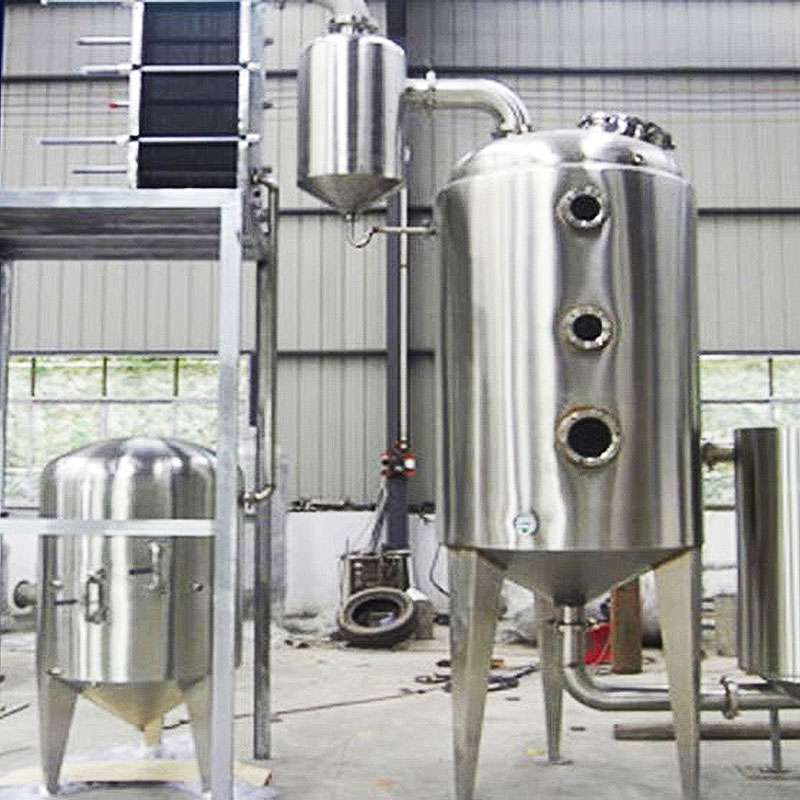
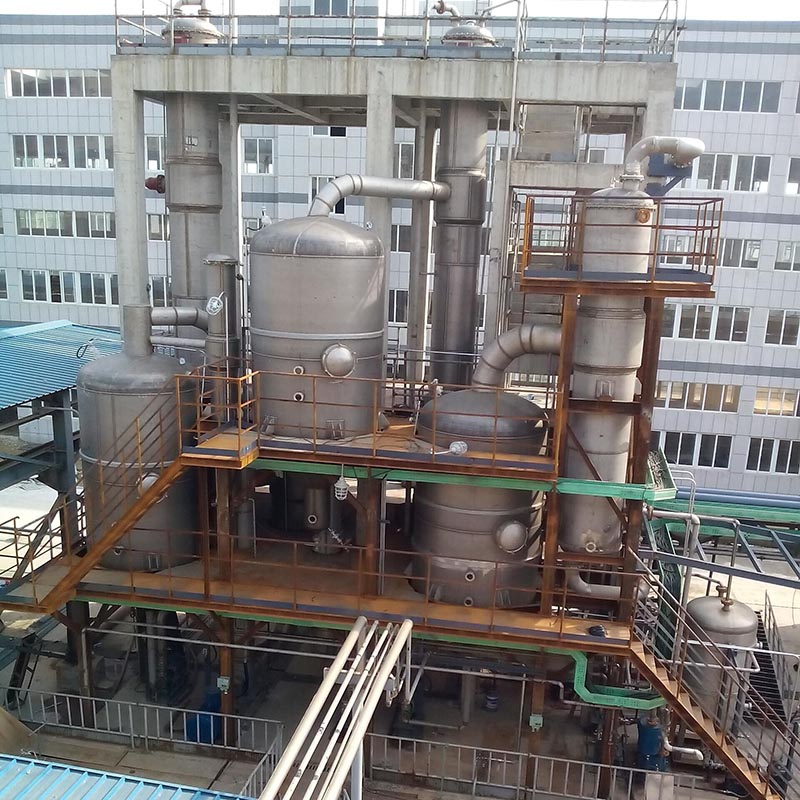
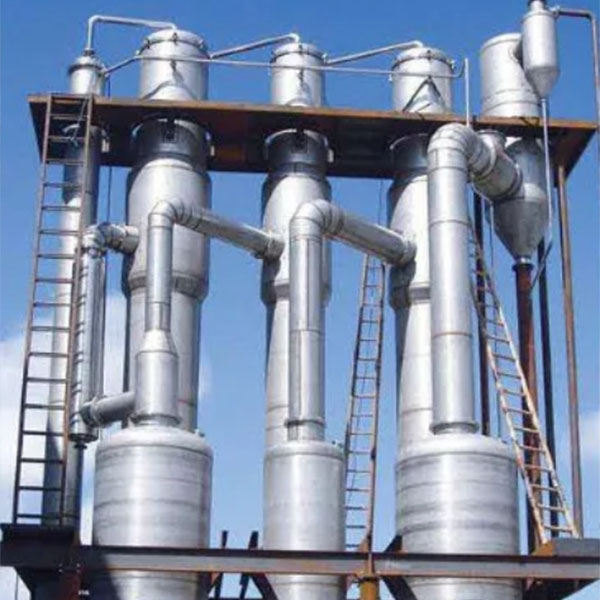
Evaporators represent a critical unit operation in industrial process engineering, serving as core thermodynamic separation equipment designed to facilitate solvent removal and solution concentration across diverse manufacturing, environmental, and processing sectors. From pharmaceutical API (Active Pharmaceutical Ingredient) production and food processing to chemical synthesis and wastewater treatment, evaporators enable precise control over liquid composition, driving efficiency, product quality, and sustainability. This article delineates the fundamental functions, operational principles, key configurations, and industrial applications of evaporators, leveraging technical terminology and engineering insights to provide a comprehensive, specialized overview.
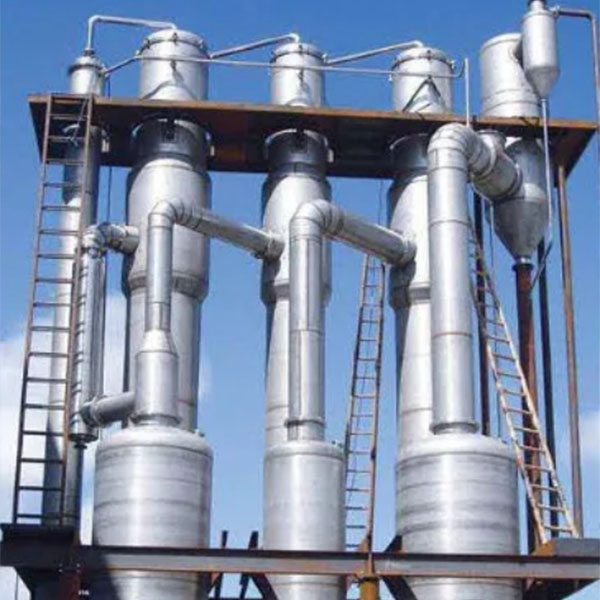
At its essence, an evaporator is a
heat-exchange device engineered to separate a solvent (typically water, but also organic solvents such as ethanol, methanol, or acetone) from a solute (solid, liquid, or gaseous component) through the application of thermal energy. Its primary function is to induce vaporization of the solvent by heating the feed solution to or near its boiling point under controlled pressure, thereby concentrating the solute phase or recovering the solvent in a purified vapor form. This process is governed by principles of vapor-liquid equilibrium (VLE) and latent heat transfer, where thermal energy is absorbed by the liquid to overcome intermolecular forces and transition to the vapor phase.
Fundamentally, evaporator operation relies on two core thermodynamic mechanisms:
1. Heat Input: Thermal energy (via steam, hot oil, or electric heating) is transferred to the feed solution, raising its temperature to the boiling point corresponding to the system pressure.
2. Vapor-Solute Separation: The solvent vapor, generated at the heat transfer surface, is separated from the concentrated solute (referred to as the "thick liquor" or "bottoms") and directed to a condenser for recovery or further processing.
Unlike simple boiling, industrial evaporators are designed to optimize heat transfer efficiency, minimize solute degradation (for heat-sensitive materials), and maximize solvent recovery—often through specialized geometries, flow configurations, and pressure control.
Key Evaporator Types and Operational Characteristics
Evaporators are classified based on flow dynamics, heat transfer configuration, and energy integration, with each type tailored to specific process requirements (e.g., feed properties, concentration targets, energy constraints). Below are two widely used configurations, expanded with technical details:
1. Falling Film Evaporators
Falling film evaporators (FFEs) are characterized by a vertical tube or plate bundle where the feed solution is distributed uniformly across the top of the heat transfer surface, forming a thin, descending liquid film under gravity. Key operational features include:
- Heat Transfer Mechanism: The thin film (typically 0.1–1 mm thick) minimizes thermal resistance, resulting in high heat transfer coefficients (1,000–5,000 W/m²·K) and efficient vaporization.
- Residence Time: Short contact time (seconds to minutes) between the liquid and hot surface makes FFEs ideal for heat-sensitive materials (e.g., fruit juices, enzymes, pharmaceutical intermediates) prone to thermal degradation.
- Pressure Range: Operates under atmospheric or vacuum conditions (vacuum lowers the boiling point, further protecting热敏性 components).
- Applications: Concentrating aqueous and organic solutions in food processing (e.g., tomato paste, dairy milk powder), biotechnology (enzyme concentration), and fine chemical manufacturing.
2. Mechanical Vapor Recompression (MVR) Evaporators
MVR evaporators are energy-efficient systems that integrate a mechanical compressor to recycle the solvent vapor generated during evaporation, eliminating the need for external steam as the primary heat source. Technical details include:
- Energy Recovery Principle: The compressor increases the pressure and temperature of the low-pressure vapor (via isentropic compression), raising its enthalpy to a level where it can serve as the heating medium for the feed solution.
- Efficiency Metrics: Reduces energy consumption by 30–80% compared to conventional steam-driven evaporators, with specific energy requirements as low as 0.5–1.5 kWh/kg of solvent evaporated.
- System Integration: Typically paired with falling film or forced circulation evaporator modules to handle high-viscosity or fouling-prone feeds.
- Applications: Large-scale wastewater treatment (zero liquid discharge systems), chemical solvent recovery, and bulk food processing (e.g., sugar syrup concentration) where energy efficiency is a critical design criterion.
Core Functions of Evaporators in Industrial Processes
Beyond the fundamental role of solvent removal, evaporators perform three interconnected, mission-critical functions that underpin industrial operations:
1. Solution Concentration and Solute Enrichment
Evaporators increase the mass fraction of the target solute by removing the solvent, achieving specified concentration factors (e.g., 5–10x volume reduction) required for downstream processing. This function is critical in:
- Pharmaceutical manufacturing: Concentrating API solutions, fermentation broths, or drug formulations to meet purity and dosage specifications.
- Food and beverage processing: Producing concentrated fruit juices (e.g., orange juice concentrate), dairy products (e.g., condensed milk), and sugar syrups while preserving sensory and nutritional properties.
- Chemical production: Enriching catalyst solutions, polymer melts, or specialty chemical intermediates to optimize reaction kinetics in subsequent unit operations.
2. Solvent Recovery and Reclamation
Evaporators enable the recovery of high-purity solvents from process streams, supporting resource circularity and cost reduction. Key applications include:
- Organic chemical processing: Recovering solvents such as acetone, toluene, or hexane from reaction mixtures or extraction processes for reuse.
- Paint and coating manufacturing: Reclaiming volatile organic compounds (VOCs) to comply with environmental regulations (e.g., EPA emissions standards) and reduce raw material costs.
- Electronic manufacturing: Purifying water or solvents used in wafer cleaning processes to maintain ultra-high purity requirements.
3. Waste Volume Reduction and Resource Recovery
In environmental engineering, evaporators play a pivotal role in minimizing waste disposal costs and enabling resource recovery from industrial effluents:
- Zero Liquid Discharge (ZLD) Systems: Evaporating water from brines or industrial wastewater to produce solid waste (sludge) or crystallized salts, eliminating liquid discharge and facilitating salt recovery for reuse.
- Heavy Metal Recovery: Concentrating wastewater streams containing valuable metals (e.g., nickel, copper) to enable subsequent precipitation or electrolytic recovery.
- Agricultural and Municipal Wastewater: Reducing the volume of digestate from anaerobic digestion processes, producing concentrated fertilizers and reusable water.
Industrial Applications Across Sectors
Evaporators are versatile equipment with tailored applications in key industries, leveraging their ability to handle diverse feed properties (viscosity, corrosivity,热敏性) and operational requirements:
1. Pharmaceutical and Biotechnology
- Concentrating fermentation broths to isolate enzymes, antibodies, or microbial biomass.
- Drying heat-sensitive APIs using low-temperature evaporators (e.g., vacuum falling film) to preserve bioactivity.
- Purifying solvents for cleanroom operations and sterile processing.
2. Food and Beverage
- Concentrating fruit and vegetable juices, nectars, and purees (e.g., apple juice concentrate, tomato paste).
- Producing powdered dairy products (e.g., milk powder, whey protein isolate) via spray evaporation or double-effect evaporators.
- Removing water from sugar cane juice to produce crystalline sugar and molasses.
3. Chemical and Petrochemical
- Recovering solvents from extraction processes (e.g., hexane recovery in edible oil refining).
- Concentrating caustic soda (NaOH) or sulfuric acid (H₂SO₄) solutions in chemical manufacturing.
- Processing petrochemical intermediates (e.g., ethylene glycol, methanol) to meet product purity specifications.
4. Environmental Engineering (Wastewater Treatment)
- Implementing ZLD systems for power plants, mining operations, and textile factories to comply with water scarcity regulations.
- Treating industrial effluents containing high levels of dissolved solids (e.g., brines from desalination plants, textile dyeing wastewater).
- Recovering water and salts from municipal wastewater for reuse in irrigation or industrial processes.
Efficiency Enhancement and Sustainability Contributions
Modern evaporator systems are engineered to optimize energy use, reduce environmental impact, and support circular economy goals:
1. Energy Efficiency Through Heat Integration
- Multi-Effect Evaporators: Sequentially using vapor from one effect as the heating medium for the next, reducing external energy input by 50–70% compared to single-effect systems.
- MVR Technology: As noted earlier, recycling vapor energy to achieve exceptional energy efficiency, lowering operational costs and carbon emissions.
- Waste Heat Utilization: Integrating evaporators with industrial waste heat streams (e.g., flue gas, process exhaust) to minimize fossil fuel consumption.
2. Process Optimization and Resource Circularity
- Fouling Mitigation: Design features such as enhanced heat transfer surfaces (e.g., corrugated plates, anti-fouling coatings) and automated cleaning-in-place (CIP) systems reduce downtime and maintain heat transfer efficiency.
- Solute Recovery: Enabling the reuse of concentrated solutes (e.g., salts, catalysts, fertilizers) within industrial processes, reducing raw material demand.
- Water Conservation: Recovering purified water from wastewater or process streams for reuse, addressing global water scarcity challenges.
3. Environmental Stewardship
- VOC Emission Reduction: Recovering organic solvents that would otherwise be released into the atmosphere, complying with air quality regulations (e.g., EU REACH, U.S. EPA Clean Air Act).
- Carbon Footprint Reduction: Lower energy consumption (especially with MVR and multi-effect systems) reduces greenhouse gas emissions associated with industrial processing.
- Waste Minimization: Reducing the volume of hazardous or non-hazardous waste, lowering disposal costs and environmental risk.
Conclusion
Evaporators are indispensable thermodynamic separation equipment whose core function—solvent vaporization for concentration, solvent recovery, and waste reduction—underpins the efficiency, sustainability, and profitability of countless industrial processes. From heat-sensitive pharmaceutical formulations to large-scale wastewater ZLD systems, evaporators are engineered to adapt to diverse feed properties and operational demands, leveraging configurations such as falling film evaporators (for热敏性 materials) and MVR systems (for energy efficiency) to deliver targeted performance.
By facilitating resource circularity, reducing energy consumption, and minimizing environmental impact, evaporators play a pivotal role in advancing industrial sustainability and circular economy objectives. Their ability to precisely control solution composition, recover valuable solvents, and reduce waste volumes makes them a cornerstone of modern process engineering across pharmaceuticals, food processing, chemicals, and environmental management.
As industries continue to prioritize energy efficiency, regulatory compliance, and resource optimization, evaporator technology will evolve further—with innovations in materials (e.g., corrosion-resistant alloys, ceramic coatings), digitalization (e.g., IoT-enabled process monitoring, predictive maintenance), and hybrid configurations (e.g., MVR-integrated multi-effect systems) driving enhanced performance and sustainability. For engineers, process designers, and industrial operators, a comprehensive understanding of evaporator functions, types, and applications is essential to selecting and optimizing these critical systems, ensuring operational excellence and long-term environmental stewardship.