Evaporation—the thermodynamic process by which a liquid transitions to a vapor phase—plays a pivotal role in numerous scientific, industrial, and environmental applications. Accurate quantification of evaporation rates is critical for process optimization, resource management, and research integrity across fields such as meteorology, hydrology, chemical engineering, food processing, and environmental science. Whether conducting laboratory-scale analysis or monitoring large-scale industrial operations, the selection of specialized equipment tailored to specific measurement objectives is paramount to ensuring data precision, reproducibility, and operational efficiency.
This article systematically examines the core equipment used for evaporation measurement, detailing their technical principles, operational mechanisms, and targeted applications within scientific and industrial contexts.
Before exploring specific equipment, it is essential to clarify the fundamental objectives of evaporation measurement: primarily, determining the mass or volume of liquid evaporated per unit time (evaporation rate, typically expressed as kg/m²·h or L/m²·h) under defined environmental or process conditions. This requires accounting for variables such as temperature, pressure, humidity, airflow, and liquid properties—factors that directly influence the evaporation kinetics and must be controlled or monitored for accurate results.
1. Evaporation Pans (Standardized Atmospheric Evaporimeters)
Evaporation pans are standardized, open-top vessels designed for in-situ measurement of atmospheric evaporation, particularly for water. The most widely recognized variant is the Class A Evaporation Pan, a globally accepted standard for meteorological and hydrological applications. Constructed from corrosion-resistant materials (typically 20-gauge galvanized steel or stainless steel), it features a diameter of 121 cm, depth of 25.4 cm, and a capacity of approximately 200 liters. It is mounted on a wooden or concrete platform 15 cm above the ground to ensure unobstructed airflow and minimize heat transfer from the surface.
Operational Principle
The pan is filled with water to a specified level, and the liquid volume or mass is measured at regular intervals (e.g., daily) using a calibrated dipstick, graduated cylinder, or weighing scale. Evaporation rate is calculated as the difference in water volume/mass before and after the measurement period, adjusted for precipitation, runoff, or splashing (via rain gauge and anti-splash collar).
Key Applications
- Meteorological monitoring (long-term climate data collection, drought assessment).
- Hydrological studies (estimating lake, reservoir, or soil evaporation for water balance modeling).
- Agricultural irrigation planning (quantifying crop water requirements).
- Environmental impact assessments (evaluating evaporation from open water bodies in industrial or urban areas).
2. Vacuum Desiccators
Vacuum desiccators are laboratory-scale equipment designed for controlled evaporation and sample drying under reduced pressure and low-humidity conditions. They consist of a sealed, transparent glass or polycarbonate chamber, a porous platform (to support samples), and a base containing anhydrous desiccants (e.g., silica gel, calcium chloride, or phosphorus pentoxide) to absorb residual moisture. Advanced models integrate a vacuum gauge and valve for precise pressure regulation.
Operational Principle
By evacuating the chamber using a vacuum pump, the atmospheric pressure is reduced, lowering the boiling point of the liquid (in accordance with the Clausius-Clapeyron equation). This accelerates evaporation while minimizing thermal degradation of heat-sensitive samples. Desiccants within the base maintain a low-humidity environment, preventing reabsorption of moisture by the dried sample.
Key Applications
- Laboratory sample preparation (drying solids, precipitates, or analytical samples for gravimetric analysis).
- Preservation of moisture-sensitive materials (pharmaceutical ingredients, biological samples, or electronic components).
- Gentle solvent removal from heat-labile compounds (e.g., proteins, enzymes, or natural products).
- Calibration of humidity sensors or moisture analyzers.
3. Humidity Measurement Instruments (Hygrometers)
While not direct evaporation measurement tools, hygrometers are indispensable for quantifying ambient or process humidity— a critical parameter that governs evaporation rates (via vapor pressure deficit). They enable the calculation of driving forces for evaporation and facilitate the correction of measurement data under variable humidity conditions.
Common Types and Operational Principles
- Capacitive Hygrometers: Utilize a moisture-sensitive polymer capacitor whose dielectric constant varies with ambient humidity. Offer high precision (±1–2% RH) and wide operating ranges (0–100% RH), suitable for laboratory and industrial environments.
- Psychrometers (Wet-Bulb/Dry-Bulb Hygrometers): Consist of two thermometers—one with a wetted wick (wet bulb) and one with a dry surface (dry bulb). Evaporation from the wick cools the wet-bulb thermometer; the temperature difference (wet-bulb depression) is used to calculate relative humidity using psychrometric charts.
- Dew Point Hygrometers: Measure the temperature at which water vapor condenses (dew point), providing a direct indication of absolute humidity. Ideal for low-humidity or high-precision applications (e.g., industrial drying processes).
Key Applications
- Calibrating evaporation measurement setups (correcting for vapor pressure effects).
- Monitoring environmental conditions in meteorological and agricultural studies.
- Controlling humidity in industrial evaporation processes (e.g., food drying, chemical synthesis).
4. Rotary Evaporators (Rotovaps)
Rotary evaporators are laboratory-scale equipment designed for efficient, gentle solvent evaporation from liquid samples. They are widely used in chemistry, biochemistry, and pharmaceutical research for concentrating solutions, purifying compounds, or recovering solvents. A typical rotovap consists of a rotating round-bottom flask, a heating bath, a condenser (water or dry ice-cooled), a receiving flask, and a vacuum system.
Operational Principle
The sample flask rotates to increase the liquid’s surface area, enhancing evaporation. Simultaneously, the system is evacuated to reduce pressure (lowering the solvent’s boiling point), and the flask is submerged in a heated bath (typically 30–80°C) to provide thermal energy. Vaporized solvent condenses in the condenser and is collected in the receiving flask, leaving the concentrated sample in the rotating flask.
Key Applications
- Solvent recovery in organic synthesis and purification processes.
- Concentration of aqueous or organic solutions (e.g., extracts, reaction mixtures).
- Purification of natural products, pharmaceuticals, and biochemicals.
- Sample preparation for chromatographic analysis (HPLC, GC) or mass spectrometry.
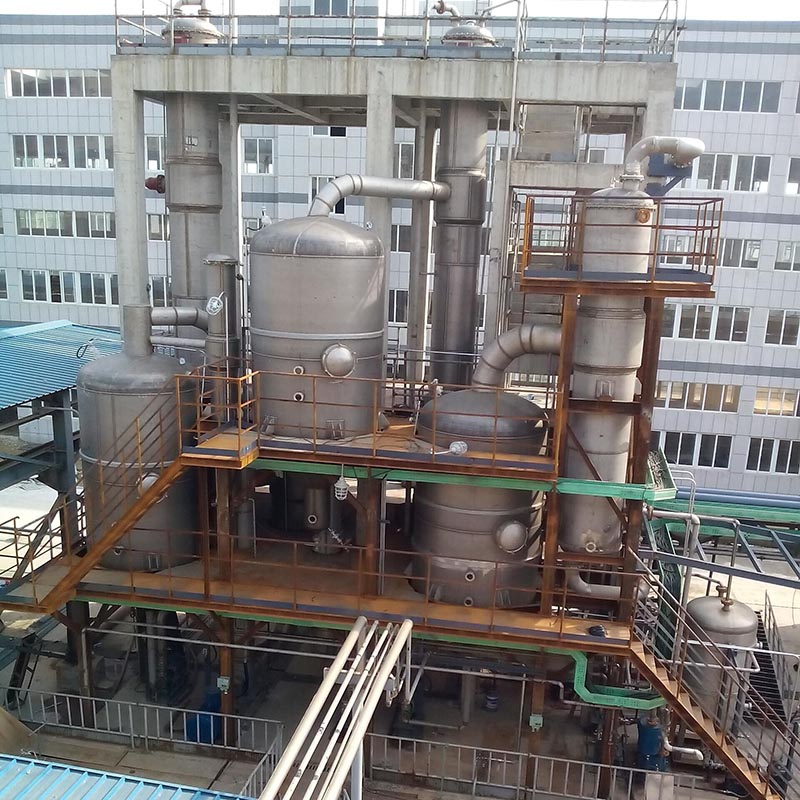
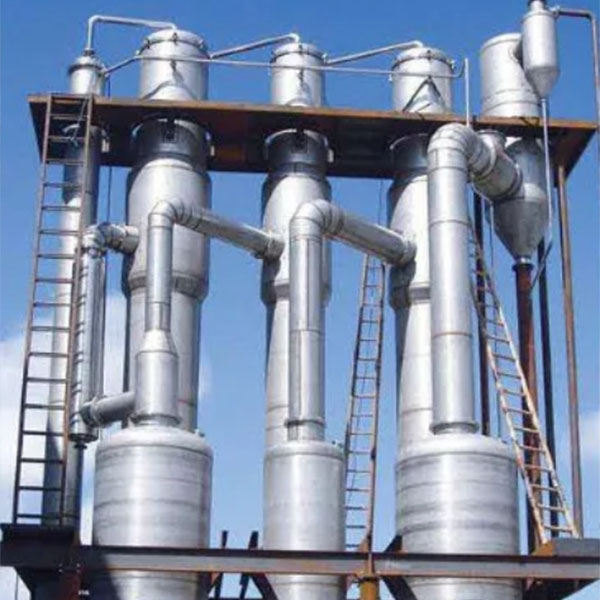
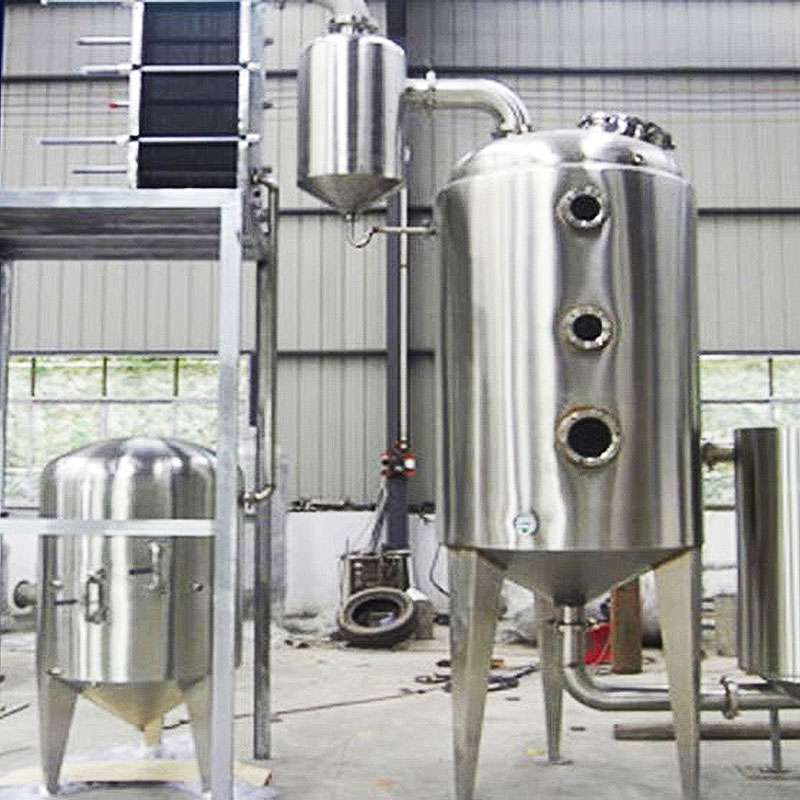
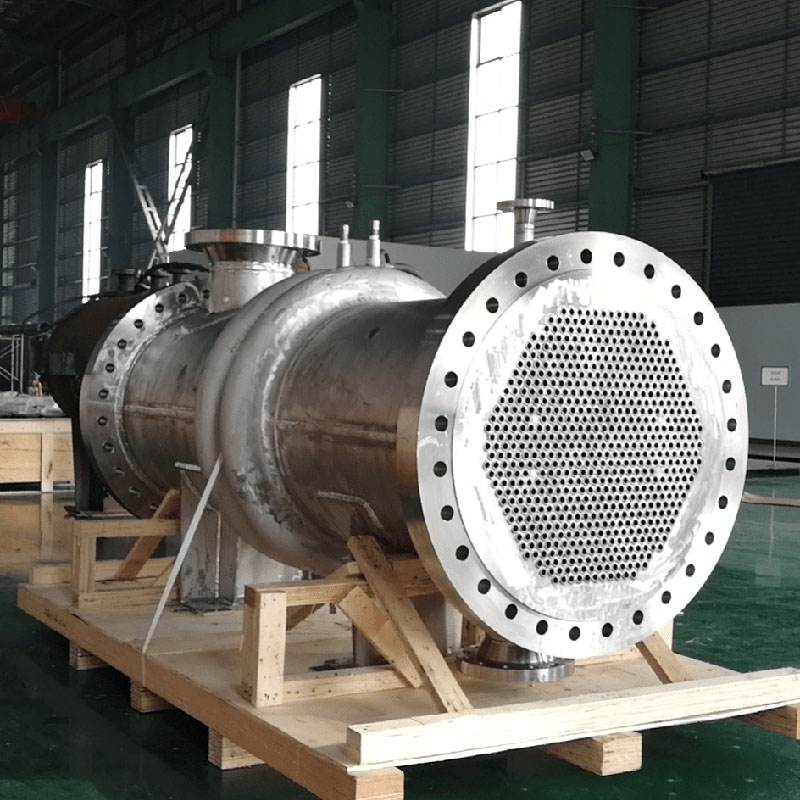
5. Industrial Mechanical Evaporators
Industrial mechanical
evaporators are large-scale systems designed for high-volume liquid evaporation in manufacturing, wastewater treatment, and resource recovery. They are engineered to handle continuous or batch processes, prioritizing efficiency, scalability, and cost-effectiveness.
Common Types and Operational Principles
- Falling Film Evaporators: Liquid is distributed uniformly over the inner surface of vertical tubes, forming a thin film that flows downward. Heat is applied to the outer tube surface, causing rapid evaporation. Suitable for heat-sensitive liquids (short residence time) and high-throughput applications (e.g., dairy processing, desalination).
- Forced Circulation Evaporators: Liquid is circulated at high velocity through a heat exchanger using a pump, preventing fouling and ensuring uniform heat transfer. Ideal for viscous, fouling-prone, or crystallizing liquids (e.g., brine concentration, wastewater treatment).
- Multi-Effect Evaporators: Utilize the vapor generated from one evaporation stage as the heating medium for subsequent stages, significantly reducing energy consumption. Commonly used in large-scale operations (e.g., sugar refining, pulp and paper processing).
- Flash Evaporators: Liquid is heated under high pressure and then released into a low-pressure chamber, causing instantaneous "flashing" (evaporation) of a portion of the liquid. Widely used in seawater desalination plants.
Key Applications
- Wastewater treatment (concentrating brines, reducing sludge volume).
- Food and beverage processing (concentrating fruit juices, dairy products, or syrups).
- Chemical and petrochemical manufacturing (solvent recovery, product concentration).
- Desalination (producing potable water from seawater or brackish water).
- Pharmaceutical manufacturing (concentrating drug solutions, drying active pharmaceutical ingredients).
Critical Considerations for Equipment Selection
Selecting the appropriate evaporation measurement equipment requires a systematic evaluation of technical requirements, operational constraints, and application-specific needs:
1. Measurement Precision and Metrological Traceability
- Scientific research and calibration applications demand equipment with high precision (e.g., ±0.1% mass accuracy) and metrological traceability to international standards (e.g., ISO 17025).
- Industrial process monitoring may prioritize repeatability (consistent results) over absolute precision, depending on process tolerances.
2. Environmental and Process Conditions
- Ambient vs. Controlled Environments: Evaporation pans are suited for outdoor, atmospheric conditions, while vacuum desiccators and rotovaps require laboratory-controlled settings.
- Temperature and Pressure Ranges: High-temperature/high-pressure applications (e.g., industrial chemical processing) require specialized evaporators (e.g., welded stainless steel designs), while low-temperature applications (e.g., biological sample drying) need cryogenic condensers.
- Fluid Properties: Viscous, corrosive, or fouling-prone liquids require evaporators with specialized materials (e.g., Hastelloy, titanium) or design features (e.g., forced circulation, anti-fouling coatings).
3. Scale and Throughput Requirements
- Laboratory-Scale: Small sample volumes (mL to L) require compact equipment (e.g., benchtop rotovaps, small-volume desiccators).
- Industrial-Scale: High-throughput operations (m³/h) demand large-capacity evaporators (e.g., multi-effect, forced circulation systems) with automated process control.
4. Compatibility and Safety
- Material compatibility with the liquid (e.g., glass for organic solvents, corrosion-resistant alloys for acids/bases) to prevent equipment degradation or contamination.
- Safety features (e.g., pressure relief valves, explosion-proof motors, fume hood compatibility) for handling flammable, toxic, or volatile liquids.
Technological Advancements in Evaporation Measurement
Recent innovations have enhanced the accuracy, efficiency, and usability of evaporation measurement equipment, driven by digitalization and sustainability goals:
1. Digital Monitoring and Data Acquisition
- IoT-integrated sensors (temperature, pressure, humidity, mass) enable real-time data logging and remote monitoring, reducing manual intervention and human error.
- Advanced data acquisition systems (DAS) synchronize multiple parameters, facilitating comprehensive evaporation kinetic analysis (e.g., modeling vapor pressure vs. time).
2. Automation and Closed-Loop Control
- Automated feed rate, temperature, and pressure control (e.g., PID controllers) ensure consistent process conditions, improving reproducibility and reducing operator variability.
- Self-cleaning mechanisms (e.g., CIP systems for industrial evaporators) minimize downtime and maintain performance in fouling-prone applications.
3. Energy Efficiency and Sustainability
- Heat recovery systems (e.g., waste heat integration in multi-effect evaporators) reduce energy consumption, aligning with industrial sustainability initiatives (e.g., net-zero carbon targets).
- Low-energy designs (e.g., vacuum-assisted evaporation, solar-powered evaporation pans for remote monitoring) minimize environmental impact.
4. Miniaturization and Portability
- Compact, portable evaporation meters (e.g., handheld hygrometer-evaporimeter combos) enable on-site measurements in remote locations (e.g., agricultural fields, offshore platforms).
- Microfluidic-based evaporation sensors for lab-on-a-chip applications (e.g., biomedical research) allow precise measurement of minute liquid volumes (μL to nL).
Conclusion
The selection of equipment for evaporation measurement is a critical decision that depends on the application’s scale, precision requirements, environmental conditions, and fluid properties. From standardized Class A evaporation pans for meteorological monitoring to high-capacity industrial multi-effect evaporators, each tool is engineered to address specific technical challenges—enabling accurate quantification of evaporation across scientific and industrial landscapes.
By leveraging advanced technologies such as digital monitoring, automation, and specialized materials, modern evaporation measurement equipment offers enhanced efficiency, reproducibility, and safety, supporting progress in fields ranging from climate science to pharmaceutical manufacturing. As sustainability and process optimization become increasingly central to industrial and scientific endeavors, future innovations will likely focus on energy-efficient designs, smart process control, and integration with broader data analytics platforms—further advancing our ability to measure and harness evaporation for practical applications.
Ultimately, the effective use of evaporation measurement equipment requires a deep understanding of both the underlying thermodynamic principles and the equipment’s technical capabilities. By aligning equipment selection with specific objectives and constraints, researchers and engineers can ensure reliable, actionable data that drives innovation, resource conservation, and process excellence.