Shell and Tube Condenser: Structural Design, Working Principle and Industrial Application
Release time:2026-05-12
Visits:10
A shell and tube condenser is a typical heat exchange device widely used in industrial refrigeration, chemical engineering and hydraulic cooling systems. Composed of a shell, heat exchange tubes, tube sheets, baffles and fluid inlet and outlet ports, this equipment realizes efficient heat transfer between two different media. Due to its simple structure, high pressure resistance and reliable cooling performance, the shell and tube condenser has become the most common cooling equipment for industrial circulating liquid cooling, refrigerant condensation and waste heat recovery.
1. Basic Structural Composition
The internal structure of a
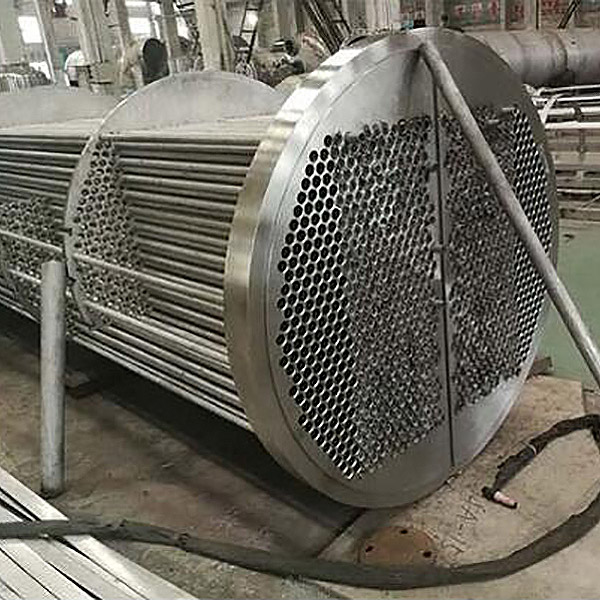
shell and tube condenser is compact and reasonable. The outer cylindrical shell provides a closed space for fluid circulation, while a large number of parallel seamless heat exchange tubes are fixed on the tube sheet. Baffles are installed inside the shell to change the flow direction of the shell-side fluid, increase the fluid turbulence and extend the heat exchange path. Common tube materials include stainless steel, copper and carbon steel, which can be selected according to corrosion resistance and heat conduction requirements. All welded joints are strictly tested to ensure airtightness and pressure resistance during long-term continuous operation.
2. Working Principle and Heat Exchange Process
The cooling principle relies on convection heat transfer between two fluids. During operation, one medium flows inside the tubes, while the other medium flows outside the tubes within the shell. When high-temperature fluid passes through the condenser, heat is transferred to the low-temperature cooling medium through the thin tube wall. With the continuous flow of cooling water or refrigerant, the heat is taken away, and the high-temperature steam or hydraulic oil is condensed and cooled into liquid state. The arrangement of baffles effectively avoids fluid short-circuit flow and greatly improves the heat exchange efficiency.
3. Core Performance Advantages
Compared with other types of heat exchangers, shell and tube condensers have obvious industrial advantages. Firstly, the sturdy cylindrical structure can withstand high working pressure and extreme temperature changes, adapting to harsh industrial environments. Secondly, the large heat exchange area ensures stable cooling efficiency, even under high-flow operating conditions. Thirdly, the equipment is easy to disassemble, clean and maintain, effectively preventing scale accumulation and pipeline blockage. In addition, the low manufacturing cost and long service life make it highly cost-effective for mass industrial applications.
4. Main Industrial Application
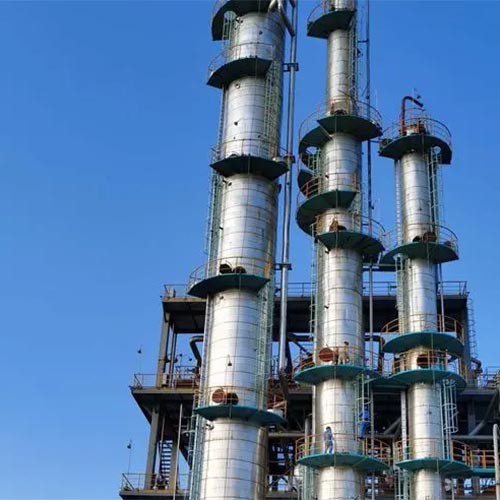
Shell and tube condensers are widely applied in multiple industrial fields. In hydraulic and mechanical industries, they cool circulating hydraulic oil to maintain stable oil viscosity and reduce equipment thermal failure. In chemical and petroleum industries, they condense chemical steam and recover waste heat. In refrigeration systems, they are used for refrigerant liquefaction and temperature control. Moreover, they serve energy-saving heating stations, power plants and food processing factories, becoming essential auxiliary equipment for industrial temperature control.
5. Conclusion and Development Trend
With the continuous development of energy-saving industrial equipment, shell and tube condensers are being optimized toward compact structure, anti-corrosion materials and higher heat transfer efficiency. Advanced tube rolling technology and anti-scaling coating further extend service life. In summary, the shell and tube condenser remains one of the most mature and reliable heat exchange devices. It provides stable cooling guarantee for mechanical operation and plays an important role in industrial energy conservation and consumption reduction.