Industrial Stirred Tank Reactors (STRs): Design Principles, Hydrodynamics, and Scale-Up Strategies
Release time:2026-05-12
Visits:7
Introduction
The
Stirred Tank Reactor (STR), commonly known as the reactor or reaction kettle in industrial parlance, constitutes the cornerstone of chemical process engineering. As the most widely utilized equipment for multiphase reactions, STRs provide a controlled environment for mixing, heat transfer, mass transfer, and chemical transformation. Their versatility spans the gamut of industries—from bulk chemicals and pharmaceuticals to polymers and specialty materials—where precise control over reaction kinetics and product quality is imperative.
Mechanical Configuration and Core Components
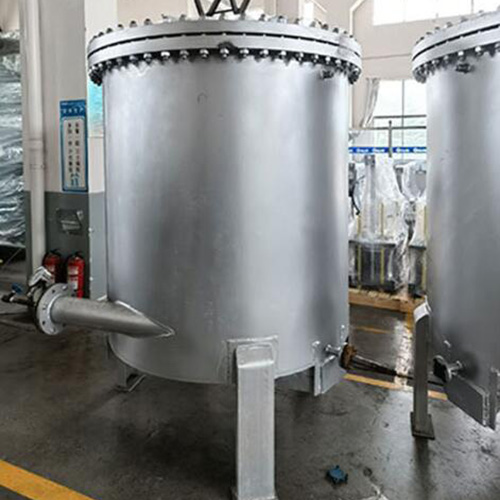
A standard industrial STR is a pressure vessel designed for both mechanical integrity and optimal process performance. Its architecture comprises several critical subsystems:
• Vessel and Jacket: Typically a cylindrical shell with a dished head, constructed from stainless steel or corrosion-resistant alloys. Heat transfer is facilitated via an external jacket (e.g., dimple, half-pipe, or conventional jackets) or internal coils, enabling precise thermal management.
• Agitation System: The heart of the reactor. It includes a central shaft driven by a gearmotor, supporting various impeller types (e.g., Rushton turbines, pitched-blade turbines, hydrofoils, or anchors) selected based on the desired flow regime.
• Sealing Systems: Mechanical seals or packing glands prevent leakage of volatile or hazardous contents under pressure, often incorporating double-seal arrangements with barrier fluid systems for high-risk applications.
• Internal Baffles: Vertical plates mounted on the vessel wall to disrupt vortex formation and convert rotational flow into axial and radial mixing, thereby eliminating dead zones.
Hydrodynamics and Mixing Mechanisms
The efficacy of an STR is governed by its hydrodynamic behavior, which dictates the uniformity of the reaction environment. Key phenomena include:
• Flow Regimes: Depending on the Reynolds number (Re), the system transitions from laminar to transitional and finally to turbulent flow. Turbulent flow is generally preferred for fast reactions to ensure micro-mixing.
• Impeller Selection:
◦ Radial Flow Impellers (e.g., Rushton turbines) generate high shear, ideal for gas dispersion or immiscible liquid-liquid systems.
◦ Axial Flow Impellers (e.g., hydrofoils) provide bulk motion and pumping capacity, suitable for solid suspension or blending viscous fluids.
• Power Consumption: Described by the Power Number (N_p), which correlates torque requirements to fluid density and viscosity. Optimization of power input is crucial for energy efficiency without compromising mixing quality.
Heat Transfer and Thermal Control
Chemical reactions are often exothermic or endothermic, necessitating robust thermal management. The design must account for:
• Heat Transfer Coefficients (U): The overall coefficient depends on the film coefficients of the process fluid (enhanced by agitation), the jacket side fluid, and the wall resistance.
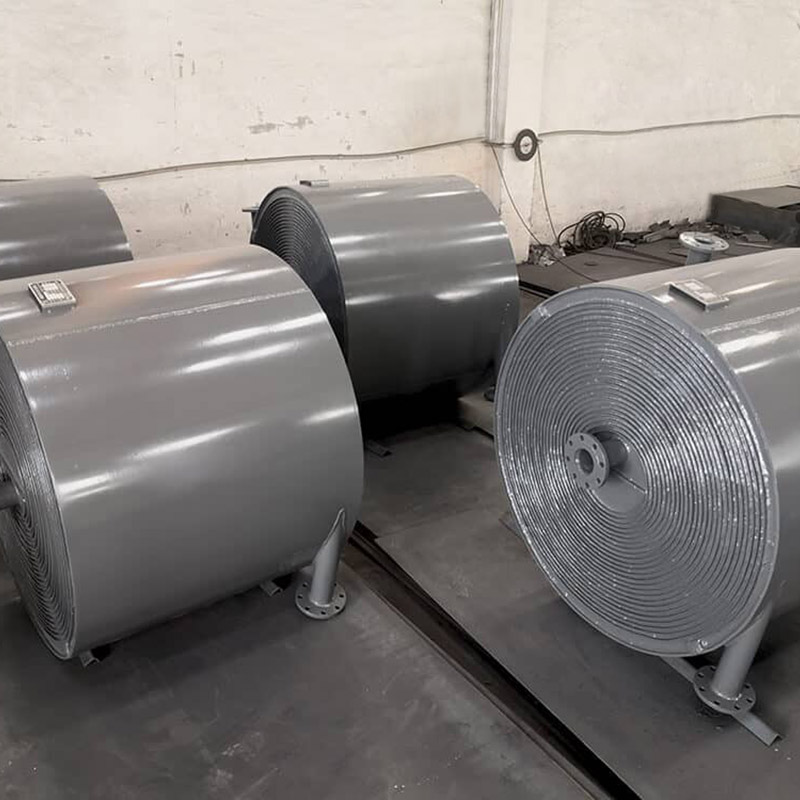
• Jacket Types: Half-pipe coils offer high velocity and turbulence for high-pressure steam or heat transfer oils, whereas conventional jackets are easier to clean but less efficient for high heat fluxes.
• Emergency Cooling: Large reactors often incorporate quench systems or secondary cooling loops to mitigate runaway reaction scenarios.
Scale-Up Challenges and Strategies
Scaling up from laboratory to production scale is one of the most complex aspects of reactor engineering. Geometric, kinematic, and dynamic similarities must be maintained:
• Constant Power per Unit Volume: A common rule of thumb for scaling up blending operations, though it may not preserve tip speed or mixing time.
• Constant Tip Speed: Often used when shear forces are critical (e.g., crystal breakage or emulsion formation).
• Dimensionless Analysis: Utilizing dimensionless numbers (Reynolds, Froude, Nusselt) to predict mixing times, blend times, and heat transfer rates across scales.
Specialized Variants and Applications
Modern industry demands specialized configurations to meet specific process requirements:
• Batch vs. Continuous: While batch STRs offer flexibility for multi-product facilities, Continuous Stirred Tank Reactors (CSTRs) in series are employed for large-scale, steady-state production.
• High-Pressure Reactors: Autoclaves designed for hydrogenation or polymerization at pressures exceeding 100 bar.
• Bioreactors: STRs adapted for aerobic fermentation, featuring sterile designs and specialized impellers for low-shear oxygen transfer.
Conclusion
The stirred tank reactor remains an indispensable unit operation due to its robustness and adaptability. While seemingly mature technology, ongoing advancements in computational fluid dynamics (CFD) modeling, advanced materials, and smart sensor integration continue to push the boundaries of efficiency, safety, and product consistency in chemical manufacturing.