








© 2025 Wuxi Hongdinghua Chemical Equipment Co.,Ltd. All Rights Reserved.SEO Services:by Wangke
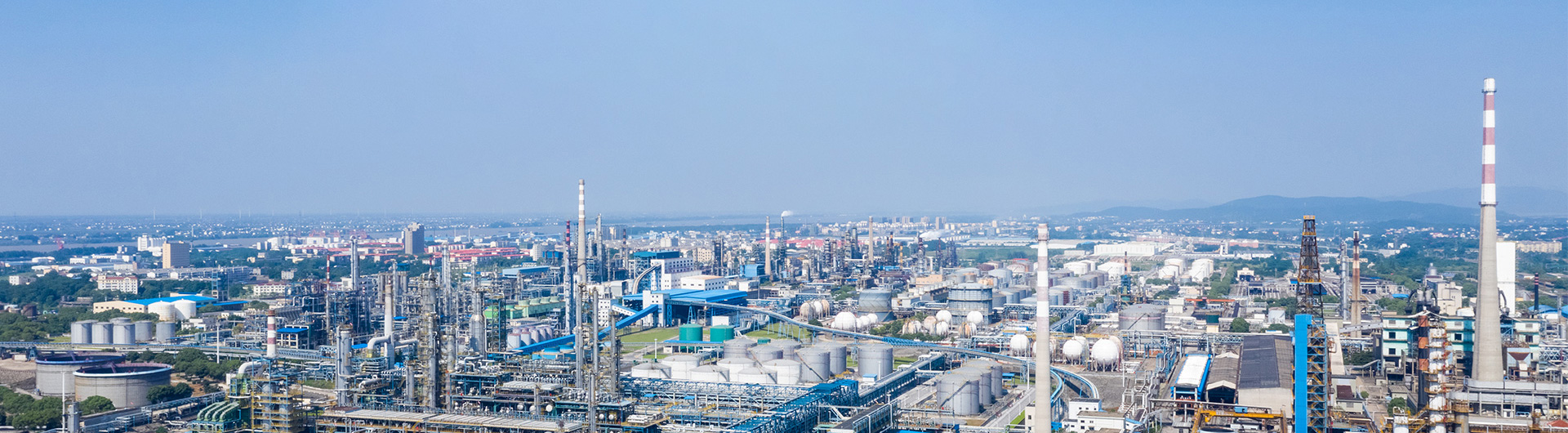
What Industry Uses Distillation Towers
2025-12-22
Distillation towers—also referred to as distillation columns or fractionating columns—are foundational unit operations in chemical engineering, designed to separate multicomponent mixtures into purified fractions based on differences in relative volatility (a function of boiling points and vapor pressure). Governed by principles of vapor-liquid equilibrium (VLE) and mass transfer, these vertically oriented structures enable precise separation of liquids, gases, or liquid-gas mixtures, making them indispensable across industries requiring high-purity feedstocks, intermediate products, or end-use commodities. This article systematically outlines the core industrial applications of distillation towers, technical nuances of their operation, key design considerations, and modern advancements, emphasizing their role in driving process efficiency and product quality. 1. Technical Fundamentals: How Distillation Towers Operate At their core, distillation towers facilitate fractional distillation—a continuous separation process optimized for mixtures with overlapping boiling points. The technical workflow relies on three critical mechanisms: - Vaporization: A reboiler at the tower base heats the feed mixture, vaporizing the more volatile (lower boiling point) compone...
Understanding DMF Solvent Recovery Processes
2025-12-19
Dimethylformamide (DMF, CAS No. 68-12-2) is a high-performance polar aprotic solvent widely utilized in industrial manufacturing due to its exceptional solvency for a broad spectrum of organic and inorganic compounds. With a boiling point of 153°C, melting point of -61°C, and high miscibility with water and most organic solvents, DMF is indispensable in processes such as polyurethane fiber (spandex) production, pharmaceutical API synthesis, electronic material fabrication, and specialty chemical manufacturing. However, its extensive use generates DMF-laden wastewater streams that necessitate advanced recovery technologies to ensure regulatory compliance, resource circularity, and economic sustainability. This article systematically explores the technical principles, core processes, operational challenges, and innovative advancements in DMF solvent recovery, providing a rigorous, industry-aligned overview for process engineers, environmental professionals, and industrial stakeholders. 1. Introduction to DMF and the Rationale for Recovery 1.1 Key Properties of DMF Driving Industrial Use DMF’s unique combination of chemical stability (under typical process conditions), high dielectric constant (36.7 at 25°C), and ability to solvate ionic and non-ionic species ...
What Is the Difference Between a Water Distiller and an Alcohol Distiller?
2025-12-10
Water distillers and alcohol distillers are both based on the principle of thermal separation (vaporization followed by condensation) but are engineered for fundamentally different purposes: water distillers purify water by removing non-volatile contaminants (e.g., minerals, bacteria), while alcohol distillers concentrate ethanol from fermented mixtures by leveraging differences in boiling points between alcohol and water. Their design, operating parameters, and end-use applications diverge significantly—reflecting the unique challenges of each task (e.g., achieving potable water purity vs. optimizing alcohol yield and flavor). This article contrasts the two distiller types across core dimensions: purpose, process chemistry, equipment design, performance metrics, and industrial/lifestyle applications—aligned with standards such as ASTM D1193 (specifications for reagent water) and TTB (Alcohol and Tobacco Tax and Trade Bureau) regulations for alcohol production. 1. Core Purpose: Purification vs. Concentration The fundamental distinction between water and alcohol distillers lies in their primary objective, which dictates every aspect of their design and operation: Water Distillers: Purification of Water Water distillers are purpose-built to produce chemica...
What Can I Use Instead of a Rotary Evaporator?
2025-12-06
Rotary evaporators (rotavaps) are widely used in laboratories and small-scale production for solvent removal, leveraging vacuum and rotation to create a thin liquid film and accelerate evaporation. However, they have limitations: low throughput, sensitivity to viscous/fouling materials, and risk of thermal degradation for heat-labile compounds. For applications requiring scalability, handling challenging feedstocks (e.g., viscous fluids, solids-laden mixtures), or maximizing energy efficiency, several alternatives outperform rotavaps. These include thin film evaporators (TFEs), mechanical vapor recompression (MVR) evaporators, scraped surface evaporators (SSEs), and falling film evaporators (FFEs)—each optimized for specific process needs (e.g., heat sensitivity, scale, viscosity). This article details these alternatives, their operating principles, technical advantages, ideal applications, and selection criteria—aligned with chemical engineering standards (e.g., ASTM E1336 for evaporator performance, ISO 25761 for vacuum evaporators). 1. Key Limitations of Rotary Evaporators (Context for Alternatives) Before exploring alternatives, it is critical to identify the gaps rotavaps leave, which drive the need for specialized equipment: - Low Throughput: Rotavaps proce...
Spiral Coiled Tube Reactor
2025-12-03
A spiral coiled tube reactor (SCTR) is an advanced continuous-flow tubular reactor (CFR) characterized by its helically coiled tube geometry, engineered to optimize heat transfer, mass mixing, and reaction control for chemical, pharmaceutical, and food processing applications. Unlike traditional batch reactors (which operate in discrete cycles) or straight-tube CFRs (which suffer from limited heat transfer and uneven flow), SCTRs leverage their spiral design to achieve compact footprints, enhanced turbulence, and precise temperature regulation—critical for reactions requiring strict process control (e.g., exothermic syntheses, catalytic reactions, or sterile food processing). This article explores the SCTR’s design principles, technical advantages, industrial applications, operational challenges, and future trends—aligned with chemical engineering standards (e.g., ASME B31.3 for process piping, FDA 21 CFR Part 11 for pharmaceutical process validation). 1. Core Design & Operational Principles of Spiral Coiled Tube Reactors The SCTR’s performance stems from its unique geometry and integration of key engineering principles (heat transfer, fluid dynamics, and reaction kinetics). Below is a breakdown of its critical design features and how they drive funct...
Agitated and Static Columns for Liquid-Liquid Extraction
2025-11-29
Liquid-liquid extraction (LLE)—a cornerstone separation technology in chemical, pharmaceutical, and environmental industries—relies on the selective transfer of a solute between two immiscible liquid phases (e.g., aqueous feed and organic solvent). The efficiency of this process depends entirely on interfacial contact between phases: the more intimate and controlled the contact, the higher the solute transfer rate and separation purity. To facilitate this contact, two primary column designs dominate industrial use: agitated columns (which use mechanical energy to disperse phases) and static columns (which leverage natural density differences for phase interaction). Each design is optimized for distinct process requirements—from high-throughput, fast separations (agitated) to gentle, low-energy processing (static). This article compares their design principles, performance metrics, advantages/disadvantages, and selection criteria—aligned with chemical engineering standards (e.g., ASTM E1386 for solvent extraction, ISO 6570 for column performance validation). 1. Foundational Principles of Liquid-Liquid Extraction Columns Before diving into design differences, it is critical to define the core function of LLE columns: maximizing mass transfer efficiency (mea...